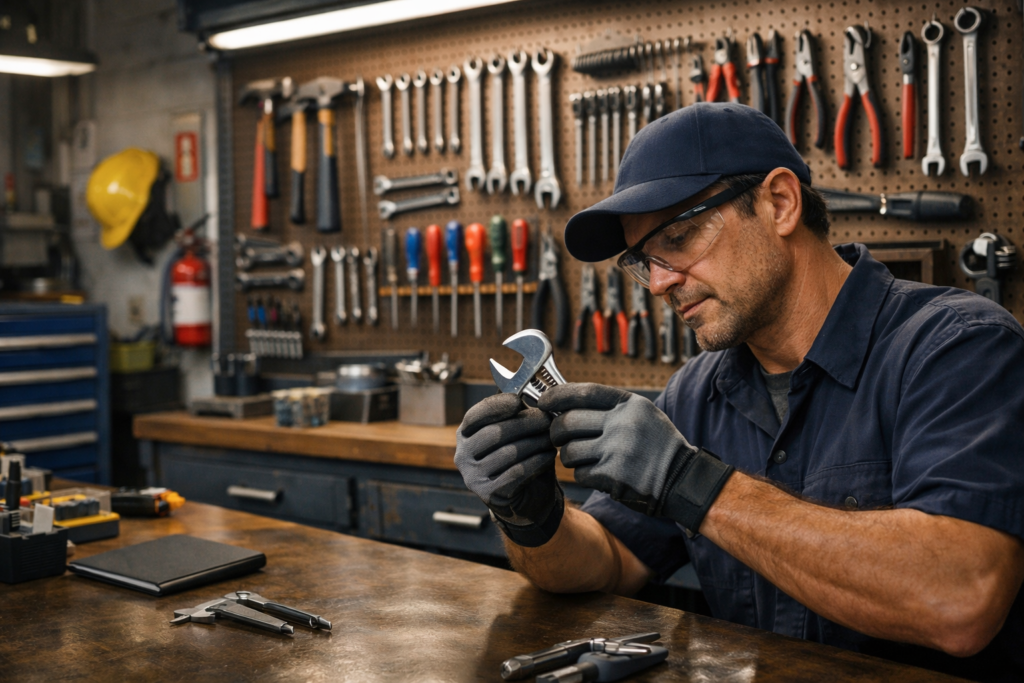
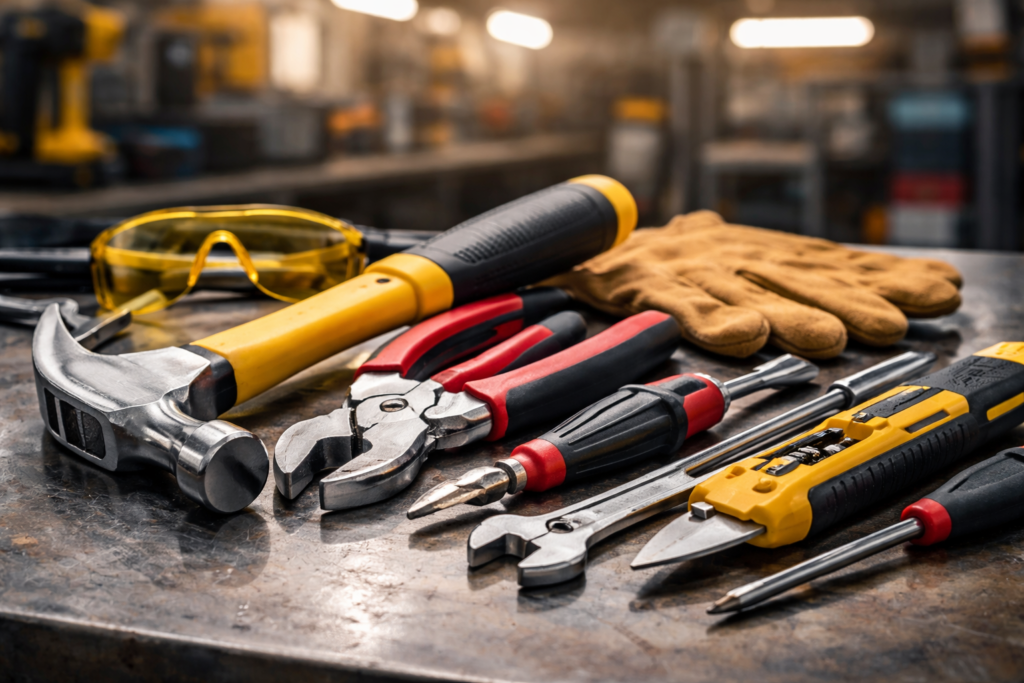
Hand tools are among the most commonly used equipment in workplaces across construction, manufacturing, oil & gas, workshops, schools, and even home environments. Despite their simplicity, improper use of hand tools remains a leading cause of workplace injuries, including cuts, crush injuries, eye damage, strains, and amputations.
From hammers and screwdrivers to spanners, chisels, pliers, and hand saws, these tools can become serious hazards when misused, poorly maintained, or used without adequate training. According to global HSSE statistics, hand tool–related injuries account for a significant percentage of lost-time incidents, many of which are entirely preventable.
This article provides a comprehensive, practical, and HSSE-compliant guide to the proper use of hand tools, covering hazards, inspection, safe operation, PPE requirements, storage, and worker responsibilities. It is designed to support safety professionals, supervisors, technicians, artisans, and frontline workers and to serve as a cornerstone article under the Tools & Equipment Safety pillar.
Why Hand Tool Safety Matters
Hand tools are often underestimated because they:
- Do not require power sources
- Appear simple and familiar
- Are widely available and easy to access
However, hand tools can cause severe injuries when:
- Used for unintended purposes
- Defective or poorly maintained
- Combined with unsafe work practices
- Used without proper PPE or training
Common Consequences of Unsafe Hand Tool Use
- Lacerations and puncture wounds
- Eye injuries from flying particles
- Hand and finger fractures
- Muscle strains and repetitive stress injuries
- Electrical shock (when used near live systems)
A strong hand tool safety culture helps to:
- Reduce incidents and near misses
- Improve productivity and work quality
- Protect hands, eyes, and musculoskeletal health
- Meet HSSE and regulatory requirements
Common Types of Hand Tools in the Workplace
Understanding hand tool categories is the first step toward safe use.
1. Striking Tools
- Hammers
- Mallets
- Sledges
Typical hazards: flying objects, glancing blows, hand injuries
2. Cutting and Shearing Tools
- Knives
- Chisels
- Hacksaws
- Tin snips
Typical hazards: cuts, amputations, flying fragments
3. Gripping and Turning Tools
- Pliers
- Spanners
- Wrenches
- Vices
Typical hazards: crushed fingers, tool slippage, strains
4. Fastening Tools
- Screwdrivers
- Allen keys
- Nut drivers
Typical hazards: slips, puncture wounds, wrist strain
5. Measuring and Marking Tools
- Tape measures
- Spirit levels
- Marking gauges
Typical hazards: cuts from sharp edges, trip hazards
Key Hazards Associated With Hand Tools
Poor Tool Condition
- Cracked handles
- Loose heads
- Blunt cutting edges
- Worn jaws or tips
Incorrect Tool Selection
- Using pliers instead of a wrench
- Using a screwdriver as a chisel
- Using undersized tools for heavy work
Unsafe Work Practices
- Applying excessive force
- Working in awkward positions
- Carrying tools in pockets
- Leaving tools unsecured at heights
Environmental Factors
- Slippery or wet conditions
- Poor lighting
- Congested work areas
- Live electrical systems nearby
General Safety Rules for Using Hand Tools
Every worker must follow these non-negotiable hand tool safety rules.
1. Use the Right Tool for the Job
- Select tools designed for the task
- Never improvise or modify tools
- Match tool size and type to the job requirements
2. Inspect Tools Before Use
Check for:
- Cracks, splits, or deformation
- Loose or damaged handles
- Rusted, dull, or broken parts
- Oil or grease on grips
Defective tools must be tagged and removed from service immediately.
3. Maintain a Firm Grip and Proper Posture
- Keep hands dry and clean
- Maintain balanced footing
- Avoid awkward body positions
- Keep fingers away from striking or cutting paths
4. Cut Away From the Body
- Always direct cutting tools away from hands and torso
- Secure workpieces properly before cutting
5. Never Use Excessive Force
- Let the tool do the work
- Use longer handles or proper leverage tools where required
- Stop if a tool slips repeatedly—reassess the task
6. Do Not Carry Tools in Pockets
- Sharp or pointed tools can cause serious injuries
- Use tool belts, boxes, or pouches instead
Personal Protective Equipment (PPE) for Hand Tool Use
PPE is a critical control measure in hand tool safety.
Mandatory PPE (Task-Dependent)
- Safety gloves: cut-resistant, impact-resistant, or general work gloves
- Eye protection: safety goggles or face shields
- Safety footwear: steel-toe or composite-toe shoes
- Protective clothing: long sleeves where appropriate
PPE selection must be based on task-specific risk assessment and Job Hazard Analysis (JHA).
Safe Use of Specific Hand Tools
Hammers and Striking Tools
- Ensure hammerheads are secure
- Do not strike hardened surfaces with steel hammers
- Use soft-faced mallets where appropriate
Screwdrivers
- Use the correct tip size and type
- Do not use as prybars or chisels
- Replace worn or rounded tips
Wrenches and Spanners
- Pull rather than push where possible
- Avoid extensions (“cheater bars”)
- Ensure correct fit to prevent slippage
Knives and Cutting Tools
- Keep blades sharp
- Retract or sheath blades when not in use
- Store safely after use
Tool Storage and Housekeeping
Good housekeeping prevents injuries and tool damage.
Best Practices
- Store tools in designated racks or toolboxes
- Keep sharp edges covered
- Do not leave tools on ladders or edges
- Return tools after use
- Keep work areas clean and organized
Training and Worker Responsibilities
Worker Responsibilities
- Follow established hand tool safety procedures
- Report damaged tools immediately
- Use PPE correctly and consistently
- Stop work if conditions become unsafe
Supervisor Responsibilities
- Provide proper tools and PPE
- Ensure training and competency
- Enforce safe work practices
- Conduct regular inspections and audits
Hand Tool Safety in High-Risk Industries
In sectors such as oil & gas, construction, marine, and manufacturing, hand tool safety must align with:
- Permit to Work (PTW) systems
- SIMOPS controls
- Lockout/Tagout (LOTO) procedures
- Dropped object prevention programs
Even simple hand tools can trigger major incidents if used incorrectly in hazardous environments.
Common Hand Tool Safety Mistakes to Avoid
- Using damaged tools “just for a quick job”
- Ignoring minor slips or near misses
- Skipping PPE for short tasks
- Carrying tools while climbing
- Failing to secure workpieces
Conclusion
Hand tools may be simple, but the risks associated with improper use are significant. Following correct selection, inspection, usage, and storage practices—supported by training and PPE—can prevent most hand tool injuries.
A strong hand tool safety culture protects workers, improves efficiency, and supports compliance with HSSE standards. Every worker, supervisor, and safety professional has a role to play in ensuring that hand tools are used safely, correctly, and responsibly—every time.
Frequently Asked Questions (FAQs)
Are hand tools considered high-risk equipment?
Yes. Despite being non-powered, hand tools cause a large number of workplace injuries due to misuse and poor condition.
How often should hand tools be inspected?
Before each use by the worker, and periodically as part of workplace safety inspections.
Can gloves reduce hand tool injuries?
Yes, when properly selected. However, gloves must be suitable for the task and not create additional hazards.
What should I do with a defective hand tool?
Tag it, remove it from service, and report it to your supervisor immediately.
Related Topics:
- Tools & Equipment Safety: Complete HSSE Guide
- Power Tools Safety Rules Every Worker Must Know
- Hand and Finger Injury Prevention in the Workplace
- Job Hazard Analysis (JHA) for Tool-Related Tasks
- PPE Selection Guide for Industrial Work
- Common Hand Tool Hazards and How to Prevent Injuries