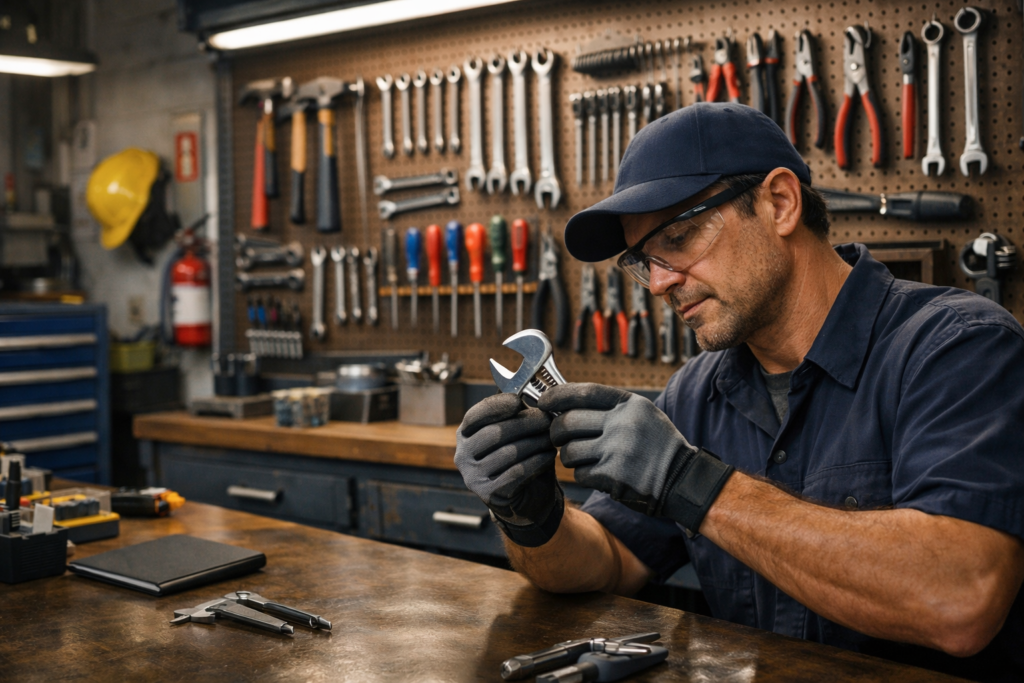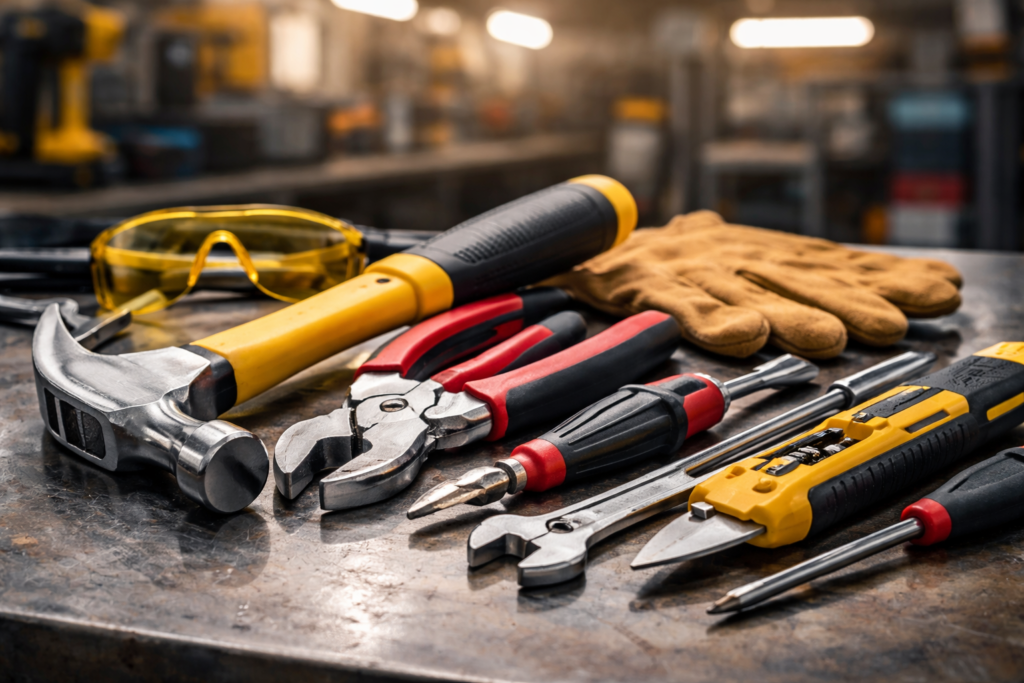

Hand tools are among the most commonly used pieces of equipment across construction sites, workshops, factories, warehouses, offshore facilities, and maintenance operations. Despite their simplicity, poorly maintained or damaged hand tools are a major cause of workplace injuries, including cuts, eye injuries, crush injuries, and repetitive strain disorders.
From an HSSE (Health, Safety, Security, and Environment) perspective, effective inspection and maintenance of hand tools is a critical control measure for reducing occupational risk, ensuring regulatory compliance, and extending equipment life.
This article provides a step-by-step, ready-to-implement framework for inspecting, maintaining, storing, and managing hand tools safely—fully aligned with global safety standards and best practices.
Why Hand Tool Inspection and Maintenance Matter in HSSE
Common Risks Associated with Poor Hand Tool Condition
Failure to inspect and maintain hand tools can lead to:
- Slips due to worn or greasy handles
- Flying fragments from cracked or mushroomed tools
- Electrical shock from damaged insulated tools
- Increased force requirements causing ergonomic injuries
- Equipment failure during critical tasks
In high-risk industries such as oil & gas, construction, manufacturing, utilities, and marine operations, these hazards can quickly escalate into serious incidents or lost-time injuries (LTIs).
HSSE Benefits of Proper Tool Management
A robust hand-tool inspection and maintenance program delivers:
- Reduced workplace injuries and near misses
- Improved task efficiency and job quality
- Longer tool lifespan and lower replacement costs
- Stronger safety culture and workforce accountability
- Improved audit and regulatory compliance outcomes
Regulatory and Standards Framework
Hand-tool safety is covered by several international and national standards, including:
- OSHA 29 CFR 1910 Subpart P – Hand and Portable Powered Tools
- ISO 45001 – Occupational Health and Safety Management Systems
- HSE (UK) Hand Tool Safety Guidance
- Company-specific HSSE procedures and PTW systems
Most standards require that defective tools be removed from service immediately and that inspection responsibilities be clearly defined.
Recommended Products for Hand Tool Inspection and Maintenance
Routine inspection and proper maintenance of hand tools require reliable accessories and storage solutions designed for industrial use.
You may find the following categories helpful:
- Industrial hand tool inspection tags and color-coding systems
- Durable toolboxes and lockable tool cabinets
- Non-sparking and insulated hand tools for high-risk environments
- Hand tool cleaning brushes and maintenance kits
🔗 View hand tool inspection and maintenance products on Amazon
Types of Hand Tools Covered Under Inspection Programs
A comprehensive inspection program should cover:
1. Non-Powered Hand Tools
- Hammers, chisels, punches
- Screwdrivers, pliers, spanners
- Files, clamps, wrenches
- Knives and cutting tools
2. Insulated and Specialist Tools
- Electrical insulated tools (VDE-rated)
- Non-sparking tools (brass/bronze)
- Torque wrenches and precision tools
For electrical work and live-equipment environments, properly rated insulated hand tools are essential to reduce shock and arc-flash risks.
Commonly used tools include:
- VDE-rated insulated screwdrivers and pliers
- Insulated spanners and adjustable wrenches
- Electrical tool kits designed for maintenance technicians
🔗 Browse insulated hand tools on Amazon
Hand Tool Inspection: Best Practices
1. Pre-Use Inspection (User-Level)
Every worker should inspect hand tools before each use, checking for:
- Cracks, chips, or deformation
- Loose, split, or damaged handles
- Mushroomed striking surfaces
- Excessive wear on jaws, blades, or tips
- Signs of corrosion or contamination
HSSE Rule: If in doubt, take it out. Any questionable tool must be removed from service.
2. Routine Scheduled Inspections (Supervisor / HSSE Level)
In addition to pre-use checks, organizations should implement:
- Weekly or monthly inspections depending on risk
- Documented inspection checklists
- Color-coding or tagging systems for inspection status
- Clear responsibility assignments
High-risk environments (offshore, confined spaces, hot work areas) require more frequent inspections.
3. Inspection of Insulated Tools
For electrical and live-work environments:
- Inspect insulation for cuts, burns, or abrasions
- Verify voltage rating markings
- Ensure tools are clean and dry
- Replace immediately if insulation integrity is compromised
Visual inspection systems help workers quickly identify tools that are safe to use, due for inspection, or removed from service.
Typical products include:
- “Inspected / Do Not Use” tool tags
- Color-coded inspection tapes
- Durable safety labels for harsh environments
🔗 Find tool inspection tags and safety labels on Amazon
Hand Tool Maintenance Best Practices
Cleaning
- Remove grease, oil, and debris after use
- Use approved solvents where necessary
- Dry tools thoroughly to prevent corrosion
Lubrication
- Lightly oil moving parts (pliers, adjustable wrenches)
- Avoid over-lubrication that could cause slipping hazards
Sharpening and Reconditioning
- Sharpen cutting tools using proper methods
- Re-dress mushroomed tool heads using grinders
- Never modify tools beyond manufacturer intent
Personal Protective Equipment for Hand Tool Tasks
Using hand tools safely often requires appropriate PPE to protect against cuts, impacts, and flying debris.
Common PPE for hand tool activities includes:
- Cut-resistant work gloves
- Safety glasses and face shields
- Impact-resistant gloves for heavy tasks
🔗 See PPE options for hand tool safety on Amazon
Safe Storage and Handling of Hand Tools
Proper storage is a key but often overlooked safety control.
Recommended Storage Practices
- Use toolboxes, shadow boards, or tool cabinets
- Store sharp tools with blade protection
- Keep tools dry and protected from chemicals
- Secure tools at height to prevent dropped-object hazards
Effective tool storage reduces trip hazards, dropped-object risks, and tool damage. Organized storage also supports inspection and accountability programs.
Useful storage solutions include:
- Heavy-duty toolboxes for site and workshop use
- Shadow boards for visual tool control
- Lockable tool cabinets for shared work environments
- Portable tool bags for maintenance teams
🔗 Explore tool storage and organization solutions on Amazon
Upgrade your tool control system with durable toolboxes, shadow boards, and lockable tool cabinets designed for industrial safety environments.
Removal from Service and Disposal
Tools must be removed from service immediately if they:
- Are cracked, bent, or broken
- Have loose or damaged handles
- Show excessive wear affecting function
- Have compromised insulation or non-sparking properties
Defective tools should be:
- Tagged “DO NOT USE”
- Physically isolated
- Repaired by competent persons or disposed of safely
Training and Worker Responsibilities
Employee Responsibilities
- Inspect tools before use
- Report defects immediately
- Use the right tool for the job
- Follow storage and housekeeping rules
Employer Responsibilities
- Provide fit-for-purpose tools
- Establish inspection and maintenance procedures
- Train workers on tool safety
- Enforce compliance through supervision and audits
Supporting Tool Safety Training and Inspections
The products referenced above may support:
- Hand tool inspection programs
- Toolbox talks and safety briefings
- Maintenance and workshop safety systems
- Compliance with workplace HSSE procedures
🔗 Access a range of workplace safety tools and accessories on Amazon
Integrating Hand Tool Safety into PTW and JHA
Hand-tool inspection should be embedded into:
- Permit to Work (PTW) systems
- Job Hazard Analysis (JHA) / Risk Assessments
- Toolbox talks and safety briefings
Including a “Tool Condition Check” step in task planning significantly reduces incident potential.
Common Hand Tool Safety Mistakes to Avoid
- Using damaged tools “just for a quick job”
- Improvising tools instead of using the correct one
- Storing tools in damp or corrosive environments
- Failing to track tool inspection status
- Ignoring manufacturer maintenance instructions
Digital Tools and Checklists for Tool Safety
Modern HSSE systems increasingly use:
- QR-coded inspection records
- Mobile inspection apps
- Digital checklists and audit trails
Environmental Considerations (HSE Alignment)
Proper maintenance also supports environmental objectives by:
- Reducing waste through extended tool life
- Preventing leaks of oils and chemicals
- Minimizing unnecessary replacements
Sustainable tool management aligns directly with ISO 14001 and ESG goals.
Conclusion
Inspection and maintenance of hand tools is a foundational element of workplace safety. When properly managed, hand tools reduce injury risks, improve task efficiency, and reinforce a proactive HSSE culture.
By implementing structured inspections, effective maintenance routines, proper storage, and continuous training, organizations can eliminate preventable injuries and ensure operational excellence.
Related Topics:
- Tools & Equipment Safety: Complete HSSE Guide
- Power Tools Safety and Inspection
- PPE Selection and Use for Maintenance Tasks
- Dropped Object Prevention
- Permit to Work (PTW) Systems Explained