Hand tools are among the most commonly used equipment in construction, manufacturing, maintenance, workshops, and home environments. While often perceived as low-risk, poor hand tool ergonomics is a leading cause of musculoskeletal disorders (MSDs), including strains, sprains, tendonitis, and repetitive strain injuries (RSIs).
From an HSSE (Health, Safety, Security, and Environment) perspective, ergonomic risks linked to hand tools can significantly affect productivity, increase absenteeism, and lead to long-term health consequences for workers. This article provides a comprehensive, practical guide to understanding hand tool ergonomics and implementing effective measures to prevent ergonomic injuries.
🔗 This guide supports and complements the Tools & Equipment Safety: A Complete Guide pillar page.
What Is Hand Tool Ergonomics?
Hand tool ergonomics focuses on designing, selecting, and using tools in a way that fits the user’s physical capabilities and task requirements. The goal is to:
- Reduce physical strain
- Minimise awkward postures
- Limit repetitive motions
- Prevent cumulative trauma injuries
Ergonomic tools and work practices help align the tool, task, and worker—a core HSSE principle.
Common Ergonomic Injuries Associated With Hand Tools
Poorly designed tools or improper usage can result in a wide range of injuries, including:
1. Strains and Sprains
Often caused by:
- Excessive grip force
- Awkward wrist angles
- Heavy or unbalanced tools
2. Repetitive Strain Injuries (RSIs)
Common examples include:
- Tendonitis
- Carpal Tunnel Syndrome
- Tennis elbow (lateral epicondylitis)
3. Nerve Compression Disorders
Prolonged vibration or pressure can lead to:
- Numbness
- Tingling
- Loss of hand strength
These injuries typically develop gradually, making early recognition and prevention essential.
Key Ergonomic Risk Factors in Hand Tool Use
Understanding ergonomic hazards is the first step toward prevention.
Excessive Force
Tools that require high grip or push force increase muscle fatigue and injury risk.
Awkward or Static Postures
Common high-risk postures include:
- Bent wrists
- Elevated shoulders
- Twisted forearms
Repetition and Duration
Repeated motions without adequate recovery time significantly increase injury likelihood.
Tool Vibration
Long-term exposure to vibrating tools may cause Hand-Arm Vibration Syndrome (HAVS).
Poor Tool Fit
Tools that are too large, too small, or poorly balanced strain the hands and arms.
Ergonomic Principles for Safe Hand Tool Selection
Choose the Right Tool for the Task
Never force a tool to do a job it was not designed for. Match the tool’s size, power, and function to the task.
Prioritise Ergonomic Design Features
Look for tools with:
- Cushioned, non-slip handles
- Neutral wrist alignment
- Rounded edges (no sharp pressure points)
- Balanced weight distribution
Select Appropriate Handle Size
A handle that’s too small or too large increases grip force and muscle fatigue.
Recommended Ergonomic Hand Tool Features (Buyer Guidance)
When sourcing tools for workplaces or personal use, consider ergonomically designed products such as Amazon Safety Products.
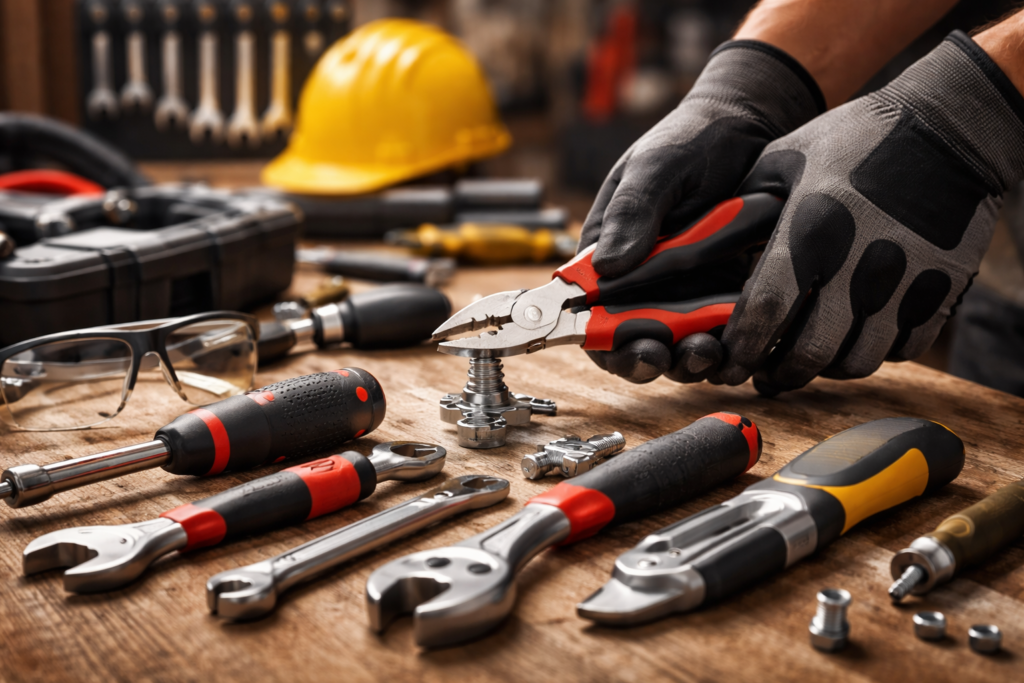
You may consider exploring ergonomically designed hand tools with cushioned grips and balanced handles, such as ergonomic pliers or screwdrivers available on Amazon. These tools are designed to reduce hand fatigue and improve control during extended use. (As an Amazon Associate, we may earn from qualifying purchases.)
Safe Work Practices to Reduce Ergonomic Injuries
Maintain Neutral Wrist Position
Keep wrists straight whenever possible. Use angled tools if the task requires wrist deviation.
Reduce Grip Force
- Keep tools well-maintained and sharp
- Use power-assisted tools where appropriate
Alternate Tasks
Job rotation helps limit prolonged repetition of the same movement patterns.
Take Micro-Breaks
Short, frequent breaks allow muscles and tendons to recover.
Use Two Hands When Possible
Distributing force across both hands reduces strain on individual muscles.
Importance of Hand Tool Maintenance in Ergonomics
Well-maintained tools are not just safer—they are more ergonomic.
- Dull tools require more force
- Loose handles increase vibration
- Misaligned components cause awkward postures
Routine inspection and maintenance directly support ergonomic injury prevention.
🔗 See also: Inspection and Maintenance of Hand Tools for Workplace Safety
Training and Ergonomic Awareness
Effective ergonomic programs include:
- Worker training on proper tool use
- Early reporting of discomfort
- Ergonomic risk assessments
- Supervisor monitoring and intervention
Educating workers to recognise early symptoms—such as tingling, stiffness, or reduced grip strength—can prevent long-term injury.
Personal Protective Equipment (PPE) and Ergonomics
While PPE is not a substitute for ergonomic design, it can support injury prevention.
Anti-Vibration Gloves
Help reduce vibration exposure from powered hand tools.
Ergonomic Work Gloves
Provide better grip and reduce contact stress.
Anti-vibration or ergonomically padded work gloves available on Amazon may help reduce hand fatigue and vibration exposure during prolonged tool use. Always ensure gloves are task-appropriate and do not compromise dexterity. (Affiliate disclosure applies.)
Management Responsibilities Under HSSE Frameworks
From an HSSE standpoint, employers should:
- Conduct ergonomic risk assessments
- Provide suitable tools and PPE
- Implement task rotation systems
- Monitor injury trends and near-miss reports
Ergonomics is a preventive control, not a reactive measure.
Integrating Ergonomics Into Your Tools & Equipment Safety Program
Hand tool ergonomics should not stand alone. It must integrate with:
- Tool selection policies
- Permit-to-Work systems
- Job Safety Analysis (JSA/JHA)
- Incident investigation processes
🔗 Related resource: Tools & Equipment Safety: A Complete Guide to Safe Use, Inspection, and Maintenance
Frequently Asked Questions (FAQs)
Are ergonomic hand tools mandatory?
While not always legally mandated, ergonomic tools are strongly recommended and often referenced in occupational safety standards.
Can ergonomic tools eliminate all injuries?
No—but they significantly reduce risk when combined with proper training and work practices.
Who benefits most from ergonomic tools?
Anyone performing repetitive, forceful, or prolonged hand tool tasks—especially maintenance technicians, mechanics, and construction workers.
Conclusion
Hand tool ergonomics is a critical yet often underestimated aspect of workplace safety. By selecting ergonomically designed tools, maintaining proper work practices, and integrating ergonomics into HSSE programs, organisations can significantly reduce strains, sprains, and repetitive injuries.
Investing in ergonomic solutions is not just a compliance measure—it is a strategic commitment to worker health, productivity, and operational excellence.
🔗 Related Articles
- Tools & Equipment Safety: A Complete Guide
- Hand Tools Safety: Common Hazards and Prevention
- Proper Use of Hand Tools: Safety Rules Every Worker Must Know
- Inspection and Maintenance of Hand Tools for Workplace Safety