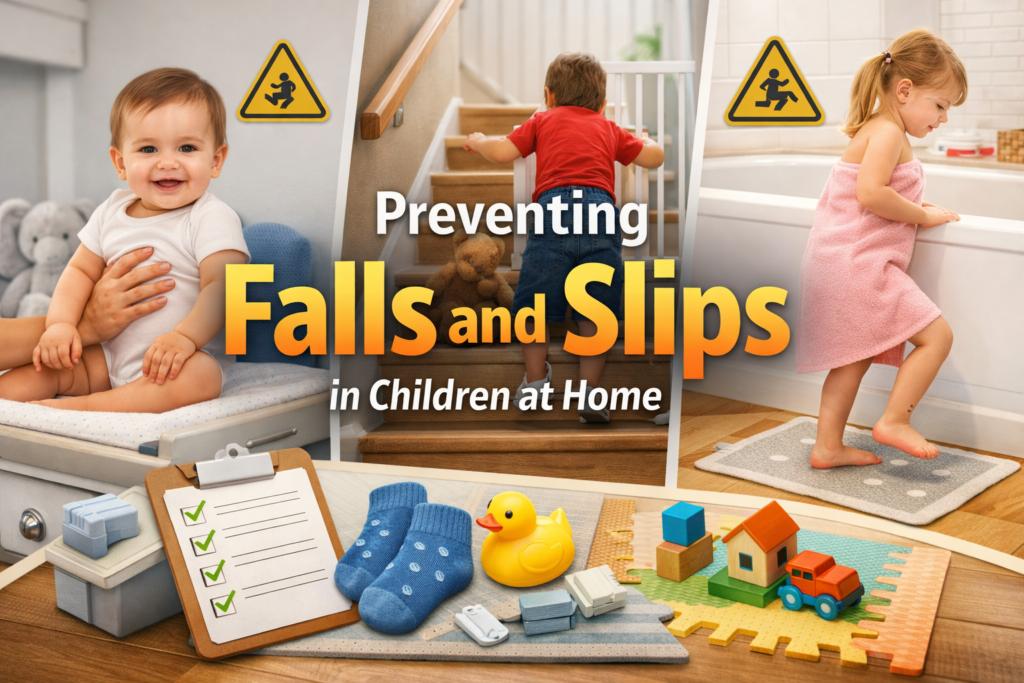
Falls and slips are among the most common home accidents affecting babies, toddlers, and young children. The good news is that most fall risks at home are predictable—and preventable—when you combine smart supervision, safer home setup, and age-appropriate rules.
This guide gives you a professional, room-by-room plan to reduce fall hazards, plus quick fixes you can do today and a home safety checklist you can reuse.
Why Children Fall More Often at Home
Children are still developing balance, coordination, and judgment. Common reasons slips and falls happen include:
- Fast-changing skills: A baby who couldn’t roll last week may roll off a bed today.
- Climbing behavior: Toddlers climb furniture, stairs, and play structures.
- Smooth surfaces + water: Bathrooms and kitchens become slippery quickly.
- Unstable furniture: Lightweight chairs, small tables, or unsecured shelves tip.
- Footwear issues: Socks on tile, oversized shoes, or slippery soles increase risk.
- Poor lighting or clutter: Toys, cords, and small items create trip hazards.
Preventing falls is about removing hazards, controlling access to high-risk zones, and teaching safe habits early.
Age-Specific Fall Prevention: What to Focus on at Each Stage
Babies (0–12 months)
Top risks: rolling off beds/sofas, changing table falls, falls from baby gear.
Key prevention actions
- Never leave baby unattended on elevated surfaces (even “for a second”).
- Change diapers on the floor when possible.
- Use safety straps on changing tables, high chairs, bouncers, and swings.
- Keep one hand on baby whenever on a raised surface.
- Lower crib mattress as soon as baby can sit or pull up.
Toddlers (1–3 years)
Top risks: stairs, climbing furniture, running on smooth floors.
Key prevention actions
- Install stair gates at top and bottom.
- Anchor heavy furniture and TVs to the wall.
- Add non-slip mats and keep floors dry.
- Teach “feet first” for climbing down.
- Keep chairs away from counters and windows.
Preschool and School-Age Children (4–10 years)
Top risks: playground-style indoor play, jumping on beds, rushing on stairs.
Key prevention actions
- Set clear rules: no jumping off furniture, no running on stairs.
- Keep stairs well lit and clutter-free.
- Use safe step stools (not chairs) for sinks/counters.
- Encourage tidy habits: toys away after play.
The “3 Layers” of Fall Prevention at Home
1) Make the environment safer
Reduce opportunities for slipping, tripping, and falling—especially from heights.
2) Supervise smartly
Supervision doesn’t mean hovering—it means positioning yourself where risk is highest (stairs, bath time, kitchen, balcony).
3) Teach safe habits early
Simple rules repeated consistently reduce risky behavior over time.
Room-by-Room Guide to Prevent Slips and Falls in Children
Living Room and Common Areas
Common hazards: slippery floors, toys, rugs, sharp corners, climbing shelves.
Do this
- Use non-slip rug pads under area rugs.
- Keep floors clear of toys and cords (use cable clips or cord covers).
- Choose stable furniture with rounded edges where possible.
- Store frequently used toys in low bins to reduce climbing.
- Avoid walkers that encourage speed and tipping (opt for safer play options).
Climbing control
- Anchor bookcases, drawers, and TVs.
- Use child locks on drawers toddlers use as “ladders.”
Stairs, Hallways, and Entryways
Common hazards: falls from stairs, clutter, poor lighting.
Do this
- Install hardware-mounted gate at the top of stairs (more secure than pressure gates).
- Use a gate at the bottom to prevent unsupervised climbing.
- Add handrails children can grip; ensure adults also have sturdy rails.
- Improve lighting: bright bulbs, night lights for late-night bathroom trips.
- Use non-slip stair treads if stairs are slick.
- Keep stairs 100% clear—no shoes, laundry baskets, toys, or bags.
Teach stair safety
- Hold the handrail.
- One step at a time.
- No carrying toys on stairs (hands should be free).
Kitchen
Common hazards: wet floors, spills, climbing to reach counters, slippery socks.
Do this
- Clean spills immediately—water, oil, and food are high-risk slip hazards.
- Use non-slip mats near sinks (secure them so edges don’t curl).
- Store heavy items low; keep tempting items off counters.
- Provide a stable step stool with non-slip feet (never a chair).
- Keep toddlers out during busy cooking with a safety gate or safe play zone nearby.
Pro tip: A “no socks on tile” rule helps. Use grip socks or bare feet indoors.
Bathroom
Common hazards: wet floors, climbing in/out of tubs, slippery tub surfaces.
Do this
- Place non-slip mats both inside the tub/shower and on the floor outside.
- Keep towels within reach so you don’t step away during bath time.
- Use a bath mat that stays flat and doesn’t slide.
- Dry puddles immediately, especially near the sink and tub.
- Teach kids to sit when washing feet or stepping into the tub.
Bath supervision rule
- Stay within arm’s reach for babies and toddlers.
- Keep the phone away—bath time is a high-risk moment.
Bedrooms and Nursery
Common hazards: falls from beds, changing tables, windows, bunk beds.
Do this
- Use guard rails on toddler beds.
- Avoid leaving a baby on an adult bed or couch.
- Secure windows: use window guards and keep furniture away from windows.
- Keep cords from blinds and curtains out of reach (cord cleats or cordless options).
- For bunk beds: top bunk is typically safer for older children only; add guard rails and enforce “no jumping.”
Night-time fall prevention
- Use a night light for the path to the bathroom.
- Keep floors clear (no toys, books, laundry piles).
Balcony, Patio, and Outdoor Areas
Common hazards: rail gaps, slippery tiles, wet surfaces, steps.
Do this
- Never allow climbing on balcony furniture.
- Keep chairs and tables away from railings.
- Use non-slip outdoor mats at entrances.
- Add step edge marking or contrast tape if steps blend in visually.
- Supervise closely when surfaces are wet (after rain or washing).
Furniture, Windows, and High-Risk “Hidden” Fall Hazards
Anchor heavy furniture and TVs
Tip-overs cause serious injuries. Anchor:
- Dressers, bookshelves, TV stands, cabinets.
Window safety
- Install window guards or stops.
- Keep beds, chairs, and toy bins away from windows.
- Avoid blind cords—use cordless designs or secure cords high.
Baby gear safety
- Always buckle straps on high chairs and changing tables.
- Place bouncers and carriers on the floor, not counters or tables.
- Ensure playpens and cribs meet safety standards and are assembled correctly.
Flooring and Footwear: Simple Changes That Reduce Slips
- Use non-slip pads under rugs.
- Avoid waxy cleaners that leave a slick film.
- Keep floors dry—especially tile, laminate, and polished concrete.
- Choose kid socks with grip soles or indoor slippers with traction.
- Teach kids to walk, not run, indoors—especially on smooth surfaces.
Safe Play Rules That Actually Work (Without Constant Yelling)
Make rules short, consistent, and repeated calmly:
- “Feet stay on the floor.”
- “Hold the rail.”
- “Walk inside.”
- “Sit in the tub.”
- “Toys away after play.”
Use positive alternatives
Instead of “Don’t climb,” try:
“Climbing is for the playground. At home, use your step stool with me.”
Emergency Readiness: What to Do If a Child Falls
Most falls are minor, but it helps to have a plan.
- Stay calm; check for pain, swelling, or unusual behavior.
- If your child hit their head, monitor closely and seek medical advice if you notice worrying symptoms (persistent vomiting, extreme sleepiness, confusion, worsening headache, or anything that feels “not normal” for your child).
- Keep a stocked first-aid kit accessible.
- Document what happened if you need to speak with a healthcare professional.
If you’re ever unsure, it’s okay to contact a medical professional for guidance.
Home Fall Prevention Checklist (Quick Audit)
Use this as a weekly or monthly safety sweep:
Stairs & halls
- Gates installed (top and bottom where needed)
- Stairs clear of objects
- Handrails sturdy and reachable
- Good lighting/night lights
Floors & rugs
- Non-slip pads under rugs
- No curled edges or loose mats
- Spills cleaned immediately
Bathroom
- Non-slip mat in tub + outside tub
- Towels within reach
- Floors dry after bath/shower
Kitchen
- Non-slip mat secured near sink
- Stable step stool available
- Tempting items off counters to reduce climbing
Furniture & windows
- TV and tall furniture anchored
- Furniture away from windows
- Window guards/stops installed
- Blind cords secured or cordless
Bedrooms
- Guard rails on toddler bed
- Night light for pathways
- Bunk bed rules + guard rails
FAQs: Preventing Slips and Falls in Children at Home
What are the most common causes of falls at home for toddlers?
Stairs, climbing furniture, running on slippery floors, and tripping over toys or cords are the most common causes.
Are socks really a slipping risk?
Yes—especially on tile or laminate. Use grip socks, slippers with traction, or bare feet indoors.
Where should I install safety gates?
Prioritize the top of stairs, then the bottom. Gates can also help block kitchens or other high-risk rooms during busy times.
How do I stop my child from climbing furniture?
Anchor furniture, remove “climbing helpers” (chairs near counters/windows), store tempting items lower, and offer safe climbing alternatives (soft play area under supervision).
What is the fastest way to reduce fall risk today?
Clear clutter from floors and stairs, add non-slip mats where water is common, and install/confirm stair gates and furniture anchors.
Conclusion: A Safer Home Is a Series of Small, Consistent Fixes
Preventing falls and slips in children at home doesn’t require perfection—just practical, repeatable habits and a setup that removes the biggest hazards. Start with stairs, bathrooms, and furniture anchoring, then work room by room using the checklist above. Small changes add up fast—and they make your home safer for every stage of childhood.