Burns and scalds are among the most preventable childhood injuries—yet they still happen quickly, often during everyday routines like making tea, bathing a toddler, or cooking dinner. Children’s skin is thinner than adults’ skin, so heat can cause damage faster, and young kids explore without understanding danger. The good news: a few smart home changes, consistent habits, and clear rules can dramatically reduce risk.
This guide breaks down the most common burn/scald hazards and gives practical steps you can apply immediately—especially in the kitchen and bathroom, where most injuries occur.
Understanding Burns vs. Scalds (And Why Kids Are at Higher Risk)
What’s the difference?
- Burns usually come from dry heat or sources like flames, hot surfaces, electrical current, or chemicals.
- Scalds come from hot liquids or steam—for example, hot drinks, bathwater, soup, or steam from pots and kettles.
Why children are more vulnerable
- Thinner skin means burns happen faster and can be more severe at lower temperatures.
- Smaller bodies mean a spill can cover a larger percentage of skin.
- Development stage: toddlers pull, climb, grab, and copy adults.
- Limited danger awareness: kids don’t recognise “hot” until it hurts.
The Biggest Burn and Scald Risks at Home
While hazards can vary by household, these are the most common:
- Hot drinks (tea/coffee), soups, and instant noodles
- Stove/oven, hot pans, pot handles, hot oil
- Kettles and hot water dispensers
- Bathwater and hot taps
- Irons, hair straighteners, curling irons
- Space heaters, generators, open flames, candles
- Electrical sockets and damaged cords
- Outdoor heat (sun-heated metal, asphalt, car interiors)
- Fireworks and backyard burning
- Hot food heated unevenly (microwaves)
Kitchen Safety: Preventing Scalds and Contact Burns
The kitchen is the #1 hot spot for child burns and scalds because it combines hot liquids, hot surfaces, and fast-paced activity.
1) Create a “Kid-Free Zone”
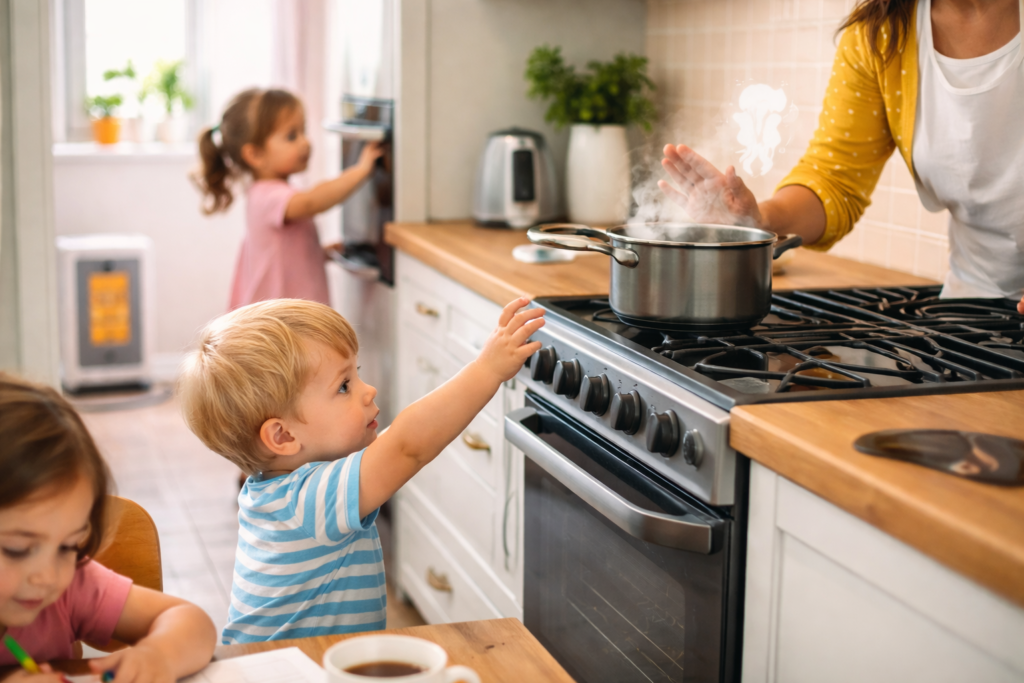
- Mark a 1–1.5 metre (3–5 ft) safety zone around the stove, oven, and cooking area.
- Use tape on the floor or a small barrier gate for toddlers.
- Teach a simple rule: “Stop at the line.”
2) Handle Pots, Pans, and Hot Oil Safely
- Turn pot handles inward so they can’t be grabbed or bumped.
- Use the back burners when possible.
- Keep lids handy—covering reduces splatter and speeds cooking.
- Never hold a child while cooking or carrying hot food.
3) Be Smart With Hot Drinks (A Major Cause of Scalds)
Hot tea and coffee spills can cause serious injuries in seconds.
- Don’t drink hot beverages while holding a child.
- Place hot drinks far from table edges and out of reach.
- Avoid tablecloths that children can pull down.
- Use travel mugs with secure lids when you’re busy.
4) Watch Out for Kettles and Hot Water Appliances
- Keep kettle cords short and out of reach (use cord winders).
- Position kettles and dispensers toward the back of the counter.
- Never let cords dangle where a child can pull.
5) Oven and Microwave Risks
- Use oven locks if available.
- Open oven doors carefully; keep children away when baking.
- Microwaves can heat unevenly:
- Stir and test food after microwaving.
- Avoid giving young children freshly microwaved foods without checking temperature.
- Let food cool before serving.
Bathroom Safety: Reducing Scald Risk From Hot Water
Scalds can happen during bath time, handwashing, or even from a child turning a hot tap.
1) Set Safe Hot Water Temperature
If you can control your water heater or system:
- Set hot water to a safer level (many safety programmes recommend around 49°C / 120°F).
If you can’t adjust it easily:
- Be extra strict with tap supervision and mixing water safely.
2) Always Run Cold Water First
A reliable routine helps prevent mistakes:
- Start with cold water
- Add warm/hot water gradually
- Mix well
- Test temperature before putting the child in
3) Test Bath Water the Right Way
- Use your elbow or wrist (more sensitive than fingers).
- Aim for warm, not hot.
- Consider a bath thermometer if you want extra confidence.
4) Never Leave a Child Unattended
Even a quick distraction increases risk (and not just burns).
- Prepare towels, soap, and clothes before filling the bath.
- If you must leave, take the child with you.
Living Room and Bedroom: Hot Tools, Heaters, and Flames
1) Hair Tools and Irons
Hair straighteners and curling irons can stay hot for a long time.
- Create a “hot tool station” on a high counter.
- Use heat-resistant pouches and let tools cool completely out of reach.
- Keep irons and garment steamers stored safely and unplugged.
2) Space Heaters and Portable Stoves
- Keep at least 1 metre (3 ft) clearance around heaters.
- Use guards if available and place heaters where they can’t be touched or knocked over.
- Never leave heaters running unattended around children.
3) Candles, Incense, and Open Flames
- Avoid open flames in rooms where children play.
- Choose safer alternatives (battery candles).
- Keep matches and lighters locked away.
Electrical Burn Prevention (Often Overlooked)
Electrical burns may be small on the surface but serious internally.
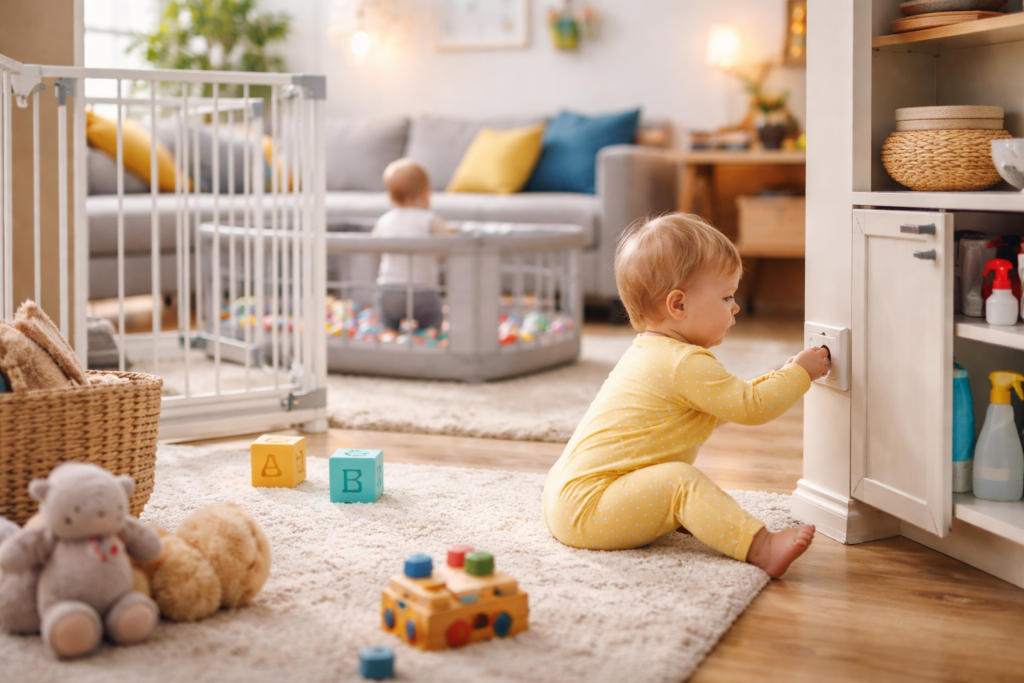
- Use socket covers or tamper-resistant outlets.
- Replace frayed cords and avoid overloaded extension strips.
- Keep chargers and extension cords away from cribs and play areas.
- Teach older children: no metal objects near sockets.
Outdoor and Travel Safety: Sun-Heated Surfaces and Cars
1) Sun-Heated Equipment and Ground
Slides, swings, metal buckles, and pavement can get hot enough to burn.
- Test surfaces with your hand before letting kids play.
- Choose shaded playtimes (morning/late afternoon).
2) Car Safety
- Never leave children in parked cars (heat danger is extreme).
- Check car seats and metal buckles before placing a child in.
- Use window shades and park in shade when possible.
Clothing, Fabrics, and Fire Safety Basics
- Dress children in snug-fitting sleepwear when possible (safer around flames).
- Keep kids away from cooking flames, generators, and outdoor fires.
- Store flammable liquids (like petrol) safely, far from living spaces.
- Have a home fire safety plan: exits, meeting point, and practice.
Teaching Kids About Heat (Age-Appropriate Safety Rules)
Children learn best with short, consistent rules:
Toddlers (1–3):
- “Hot! Don’t touch!”
- “Stop at the line (kitchen rule).”
Preschoolers (3–5):
- “Ask before you touch.”
- “Hot drinks stay in the middle of the table.”
School-age (6+):
- Teach basic kitchen skills with supervision.
- Explain risks: steam burns, hot oil, and electrical safety.
Use repetition, modelling, and praise when they follow rules.
Parent & Caregiver Burn Prevention Checklist
Use this as a quick home audit:
- Pot handles turned inward; back burners used when possible
- Hot drinks kept away from edges; no tablecloth-pulling hazards
- Kettle and appliance cords secured and out of reach
- Oven door supervised; oven lock used if available
- Bathwater mixed safely; temperature tested every time
- Hair tools/irons cooled and stored out of reach
- Space heaters guarded and kept clear of furniture
- Socket covers installed; damaged cords replaced
- Lighters/matches stored locked and high
- Outdoor surfaces checked (slides, buckles, pavement)
- The fire escape plan discussed/practiced
What To Do If a Burn or Scald Happens (Safe, General Guidance)
If a burn occurs, the priority is to reduce further heat exposure and get appropriate medical help.
- Remove the child from the source of heat.
- Cool the area with cool (not icy) running water if available.
- Remove tight items like rings or bracelets near the area (swelling can happen).
- Seek medical care urgently for:
- large burns, blistering, burns to face/hands/genitals,
- any electrical or chemical burn,
- or if you’re unsure.
(Always follow your local medical guidance and emergency services.)
FAQs: Preventing Burns and Scalds in Children
What’s the most common cause of scalds in young children?
Hot drinks and hot liquids in the kitchen—especially spills from cups, bowls, kettles, and pots.
Are microwave-heated foods risky for kids?
Yes. Microwaves can heat unevenly, creating hidden “hot spots”. Stir thoroughly and test the temperature before serving.
How can I make bath time safer?
Use a consistent routine: cold water first, add warm gradually, mix well, and test the temperature with your elbow/wrist before placing your child in the bath.
What rooms should I childproof first for burn prevention?
Start with the kitchen and bathroom, then living areas where hot tools, heaters, and candles might be used.
When should I seek urgent medical help for a burn?
For significant size, blistering, sensitive areas (face/hands), electrical/chemical burns, or any burn that worries you.
Conclusion: Prevention Is a System, Not a Single Tip
Preventing burns and scalds in children comes down to three things:
- Remove or block hazards (guards, locks, safe zones, safe storage)
- Build safe routines (bath mixing, hot drink rules, cooking habits)
- Teach simple rules that match your child’s age and understanding
A few small changes today can prevent a painful injury tomorrow—and make your home feel calmer, safer, and more kid-friendly.
Back to Home Safety Tips for Babies and Toddlers