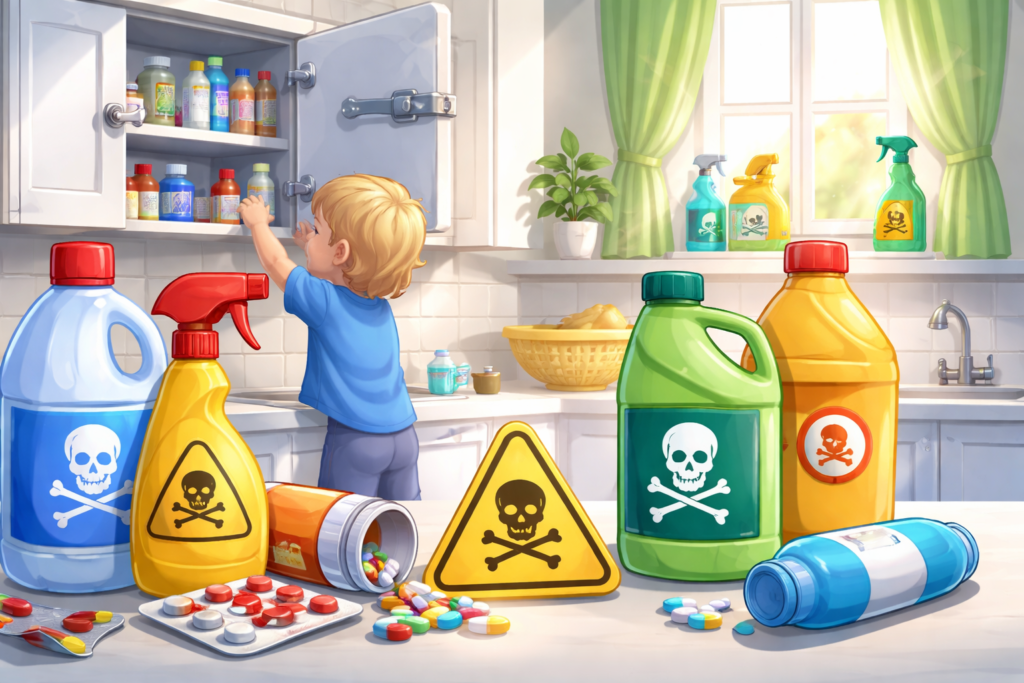
Poisoning is one of the leading causes of injury among young children worldwide. Everyday household items—medicines, cleaning products, cosmetics, and chemicals—can become extremely dangerous when accessed by curious children. Poison prevention is therefore a critical part of child safety at home.
This comprehensive guide explains why children are at risk, identifies common poisoning hazards, and provides practical, proven strategies to keep medicines and chemicals safely out of children’s reach.
Why Poison Prevention Is Critical for Child Safety
Children, especially those under five years old, explore their world by touching, tasting, and smelling objects. Bright colors, sweet smells, and familiar packaging can make medicines and chemicals appear harmless—even attractive—to them.
Key reasons children are vulnerable include:
- Natural curiosity and hand-to-mouth behavior
- Inability to read warning labels
- Smaller body size, which increases the severity of exposure
- Imitation of adult behavior, such as taking medication
Even small amounts of certain substances can cause serious injury, long-term health effects, or death.
Common Household Poisoning Hazards
1. Medicines and Supplements
Both prescription and over-the-counter medications can be dangerous to children.
High-risk examples include:
- Pain relievers (paracetamol, ibuprofen)
- Cold and flu medicines
- Vitamins and iron supplements
- Blood pressure and diabetes medications
- Herbal and traditional remedies
Important: Child-resistant packaging is not childproof. It only slows children down—it does not prevent access.
2. Cleaning Products
Many household cleaners contain corrosive or toxic chemicals.
Common examples:
- Bleach
- Toilet bowl cleaners
- Disinfectants and detergents
- Oven and drain cleaners
- Floor and surface cleaners
Mixing some cleaners (such as bleach and ammonia) can also produce toxic fumes.
3. Pesticides and Insecticides
Products used to kill insects, rodents, or weeds are particularly dangerous.
These include:
- Rat poison
- Insect sprays and coils
- Mosquito repellents
- Garden chemicals and fertilizers
4. Fuels and Automotive Products
Often stored in garages or outdoor areas, these substances are highly toxic if swallowed or inhaled.
Examples:
- Petrol (gasoline)
- Kerosene
- Engine oil
- Paint thinners and solvents
- Antifreeze
5. Cosmetics and Personal Care Products
Many people overlook these everyday items as poisoning risks.
Potentially harmful products include:
- Nail polish and remover
- Perfumes and deodorants
- Hair relaxers and dyes
- Mouthwash
- Essential oils
Effective Poison Prevention Strategies for Parents and Caregivers
Store All Medicines and Chemicals Securely
- Keep all hazardous substances locked away and out of sight
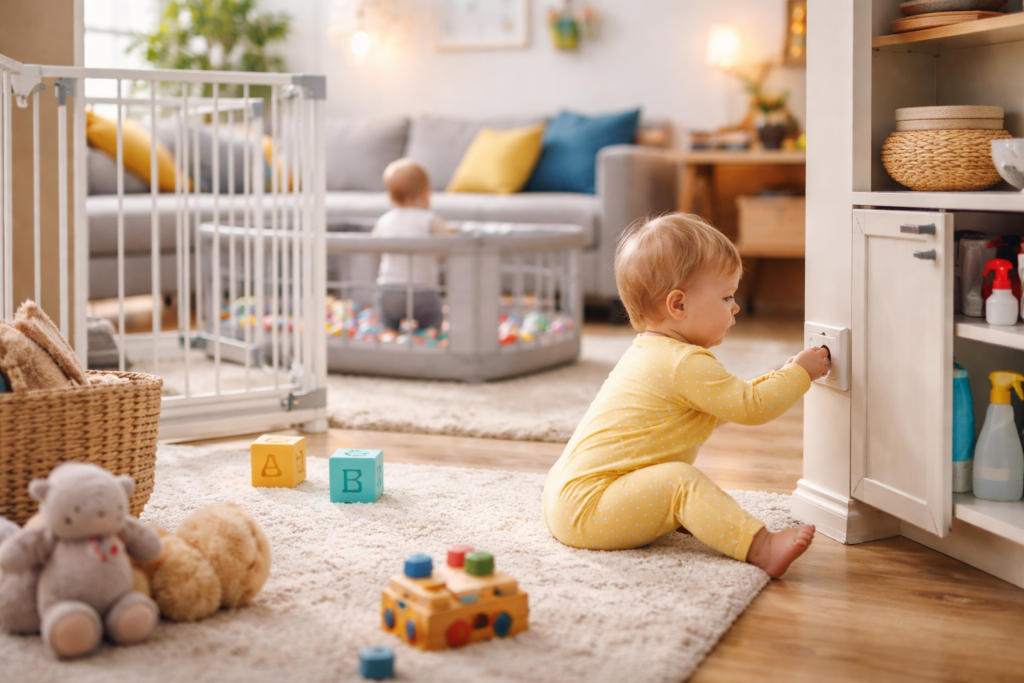
- Use high cabinets with safety latches
- Avoid storing chemicals under sinks or in low cupboards
Keep Products in Original Containers
- Never transfer chemicals or medicines into food or drink containers
- Original packaging includes safety labels and dosage instructions
- Avoid using unlabelled containers
Use Child-Resistant Packaging Correctly
- Always re-lock caps immediately after use
- Do not assume a child cannot open the container
- Replace damaged or faulty caps promptly
Avoid Taking Medicine in Front of Children
- Children often imitate adults
- Never refer to medicine as “candy”
- Explain that medicine is only for adults or when given by a trusted caregiver
Dispose of Medicines and Chemicals Safely
- Safely discard expired or unused medicines
- Do not flush medications unless instructed
- Follow local disposal guidelines or pharmacy take-back programmes.
Be Extra Careful During Disruptions
Poisoning incidents increase during:
- Holidays and family gatherings
- House moves or renovations
- Illness in the household
- Visits from guests with handbags or luggage
Always check bags, purses, and visitors’ belongings for accessible hazards.
What To Do If You Suspect Poisoning
Act Quickly
If you believe a child has swallowed, inhaled, or touched a toxic substance:
- Stay calm
- Remove the substance from the child’s reach
- Do not induce vomiting unless instructed by a medical professional
Seek Immediate Medical Help
- Call your local emergency number or poison control center immediately
- Provide details about:
- The substance involved
- The amount (if known)
- The child’s age and weight
- Time of exposure
Keep emergency numbers easily accessible at all times.
Teaching Children About Poison Safety
As children grow older, education becomes an important prevention tool.
Teach children to:
- Never taste unknown substances
- Avoid touching bottles with warning labels
- Ask an adult before eating or drinking anything unfamiliar
- Recognize hazard symbols and basic safety signs
Education should support, not replace, safe storage and supervision.
Creating a Poison-Safe Home Environment
Poison prevention works best when it is part of a broader home safety culture:
- Conduct regular safety checks
- Use childproof locks consistently
- Communicate safety rules clearly to all carers.
- Review safety practices as children grow and develop
Conclusion: Prevention Is the Best Protection
Most childhood poisonings are preventable. By safely storing medicines and chemicals, staying vigilant, and educating both adults and children, families can dramatically reduce the risk of accidental poisoning.
A poison-safe home protects not only children’s health but also parents’ peace of mind.
Back to Home Safety Tips for Babies and Toddlers