
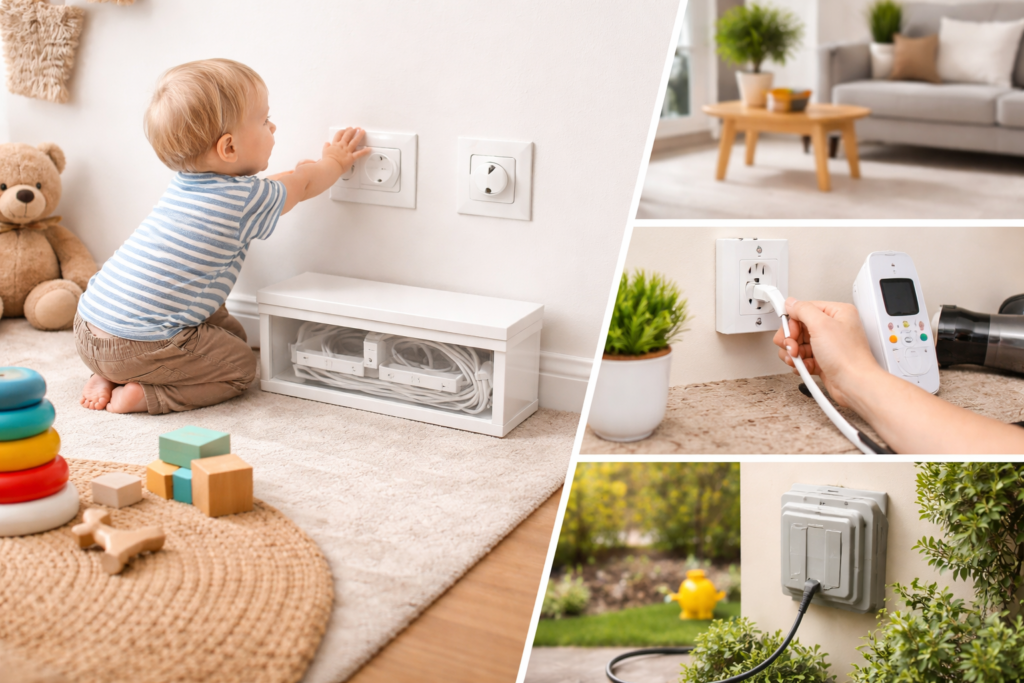
Electricity makes modern life easier—but for children, it can be a hidden hazard. Curious hands, crawling toddlers, climbing preschoolers, and confident school-age kids can all find their way to outlets, cords, chargers, and appliances. The good news: most electrical injuries at home are preventable with a few smart upgrades, safer habits, and child-appropriate education.
This guide explains the real risks, what to childproof first, how to reduce shock hazards room by room, and what to do if an electric shock happens.
Why Children Are at Higher Risk of Electric Shock
Children are more vulnerable than adults for several reasons:
- Curiosity + exploration: Kids touch, poke, pull, and taste new things.
- Smaller bodies: A lower amount of electrical current can cause harm.
- Limited hazard awareness: They don’t recognize “invisible” dangers like live electricity.
- Common child behaviors: Chewing cords, climbing furniture to reach devices, playing near water, and inserting objects into openings.
Electrical injuries can occur from wall outlets, damaged cords, exposed wires, appliance misuse, and water + electricity contact (bathrooms, kitchens, outdoors).
Key Electrical Hazards in Family Homes
1) Outlets and plugs
- Open outlets at child height
- Loose outlet covers
- Plugs partially inserted (exposed prongs)
2) Power cords and chargers
- Frayed or cracked insulation
- Cords under rugs (heat and wear)
- Dangling cords that invite pulling
- Overloaded extension leads
3) Appliances
- Hair tools, kettles, irons, toasters, blenders
- Devices used near sinks or bathtubs
- Chargers left plugged in at floor level
4) Electrical panels and wiring issues
- Missing cover plates
- Flickering lights or buzzing outlets
- Hot or discolored sockets (warning signs)
5) Outdoor electrical risks
- Wet conditions + extension cords
- Pool equipment, garden tools, holiday lights
- Damaged outdoor sockets
Childproofing Priorities: The “Top 10” Electrical Safety Actions
If you do nothing else, start here:
- Install tamper-resistant outlets (TRRs) or use high-quality outlet covers.
- Use RCD/GFCI protection in bathrooms, kitchens, laundry, and outdoors.
- Replace damaged cords immediately—don’t tape and “manage later.”
- Keep chargers and small adapters out of reach, especially near beds and play areas.
- Anchor furniture so kids can’t climb to reach plugged-in devices.
- Use cord shorteners/cord boxes to prevent pulling and chewing.
- Avoid daisy-chaining extension leads and overloading sockets.
- Keep appliances away from water and unplug after use.
- Cover unused sockets and avoid leaving plugs half-in.
- Book a qualified electrician if you notice warning signs (heat, buzzing, burning smell, frequent tripping).
Room-by-Room Electrical Safety Checklist for Families
Living room and bedrooms
These rooms often have many chargers, TVs, lamps, and power strips.
Do this:
- Use tamper-resistant receptacles or sliding outlet covers.
- Route cords behind furniture and secure them with clips.
- Keep power strips in a covered box or mounted high (out of reach).
- Avoid placing lamps or devices where cords can be tugged from a crib/bed.
- Choose USB wall outlets or mount charging stations high to reduce floor-level chargers.
Avoid this:
- Cords under rugs or carpets (wear + overheating).
- Extension leads as permanent wiring.
- Leaving gaming consoles/TVs plugged into exposed strips on the floor.
Kitchen
Kitchens combine electricity, metal surfaces, and water—high risk.
Do this:
- Ensure countertop outlets have RCD/GFCI protection.
- Keep kettles, toasters, blenders pushed back, cords shortened.
- Unplug and store appliances after use.
- Use child locks where kids can access appliance storage drawers.
Avoid this:
- Using appliances with wet hands.
- Letting cords hang over the counter edge (easy to pull down).
Bathroom
This is one of the most important zones: water dramatically increases shock risk.
Do this:
- Confirm bathroom outlets are protected by RCD/GFCI.
- Keep hair dryers, straighteners, shavers unplugged when not in use.
- Store appliances in a closed cabinet, not on the counter.
- Use covered outlets and keep chargers out of the bathroom entirely if possible.
Avoid this:
- Devices on the sink edge.
- Extension cords in bathrooms—ever.
Nursery and play areas
Kids spend time here unsupervised more often.
Do this:
- Place baby monitors and night lights so cords are not reachable from the crib.
- Use outlet covers behind furniture and near play mats.
- Keep chargers and spare batteries locked away.
Avoid this:
- Charging devices overnight on the floor near a toddler bed.
- Long dangling cords from blinds/curtains near outlets.
Laundry room
Washers, dryers, and moisture can create risk.
Do this:
- Ensure outlets and circuits are properly rated and protected.
- Keep detergent and small electrical devices (irons, steamers) secured.
- Fix any leaks immediately.
Garage and outdoor areas
Outdoor sockets, tools, and wet surfaces raise risk significantly.
Do this:
- Use weatherproof outlet covers and RCD/GFCI outdoors.
- Only use extension cords rated for outdoor use.
- Keep cords away from puddles, grass watering zones, and pools.
- Store power tools locked away; remove batteries where possible.
Avoid this:
- Indoor extension leads outside.
- Running cords where children play.
Safe Use of Extension Cords, Power Strips, and Chargers
Extension cords: safer rules for parents
- Use only short-term; treat them as temporary solutions.
- Choose cords with child-safe design and appropriate power rating.
- Keep them visible, not under rugs or furniture edges.
- Replace if warm to the touch, damaged, or loose at the plug.
Power strips: what to look for
- Overload protection (resettable breaker)
- Surge protection (useful for electronics, not a substitute for safety)
- Covered or enclosed design if kept low
Chargers and adapters
- Keep charging stations up high, not at floor level.
- Avoid cheap, unverified chargers (overheating risk).
- Replace bent or sparking chargers immediately.
Teach Kids Electrical Safety: Age-Appropriate Lessons
Ages 2–4 (toddlers)
Keep it simple and consistent:
- “Outlets are not for touching.”
- “Only grown-ups plug things in.”
- Use repetition and supervision.
Helpful tip: Use a “safe vs unsafe” game with pictures (outlet, cord, toy).
Ages 5–8 (young children)
They can learn basic rules:
- Never insert anything into outlets.
- Don’t pull cords.
- Keep electricity away from water.
- Tell an adult if they see a damaged cord or loose outlet.
Ages 9–12 (older kids)
They can take more responsibility:
- Safe charging habits (dry hands, stable surfaces).
- Recognize warning signs (sparks, buzzing, burning smell).
- Safe use of small appliances with permission.
Teenagers
Focus on real-life scenarios:
- Proper use of extension cords and power strips.
- Outdoor electrical safety.
- Why “quick fixes” (tape on cords, overloaded sockets) are dangerous.
Warning Signs of an Electrical Problem at Home
Call a qualified electrician if you notice:
- Outlets or switches that feel warm/hot
- Burning smell near sockets
- Buzzing sounds
- Frequent tripping breakers
- Flickering lights (not caused by bulb issues)
- Discolored outlets or scorch marks
- Loose outlets where plugs fall out easily
These can signal unsafe wiring, overload, or failing components.
What to Do if a Child Gets an Electric Shock
If you suspect electric shock, act quickly and safely.
Step-by-step emergency response
- Do not touch the child if they’re still in contact with the source.
- Turn off power at the switch, unplug device, or shut off the breaker.
- If you can’t shut off power immediately, use a dry wooden object (like a broom handle) to separate them from the source—never metal, never wet materials.
- Call emergency services if the child is unconscious, has trouble breathing, has burns, or seems unwell.
- Even with a “small” shock, seek medical advice—especially for young children or if symptoms appear later.
Afterward, document what happened and have the electrical source inspected before using it again.
Frequently Asked Questions
Are outlet plug caps enough for childproofing?
Basic plug caps help, but many can be removed by determined toddlers. Tamper-resistant outlets or sliding outlet covers are typically more reliable for long-term safety.
Do I really need RCD/GFCI protection in the home?
Yes—especially in areas with water (bathroom, kitchen, laundry) and outdoors. These devices can cut power quickly when a fault is detected, reducing the risk of serious shock.
Can a phone charger shock a child?
Most quality chargers are designed to be safe, but damaged cords, exposed wiring, or low-quality chargers can create a risk. Also, chewing cords is a real hazard for toddlers.
What’s the safest way to manage cords in a playroom?
Route cords behind furniture, use cord clips, and keep power strips inside enclosed boxes or mounted out of reach. Avoid leaving chargers at floor level.
When should I call an electrician?
Any time you notice heat, buzzing, burning smells, repeated breaker trips, scorch marks, loose outlets, or if your home has older wiring and you’re adding more devices.
Quick “Parents’ Electrical Safety” Home Checklist
- Tamper-resistant outlets or sliding outlet covers installed
- RCD/GFCI protection in wet areas and outdoors
- Cords secured, not dangling, not under rugs
- Power strips protected and out of reach
- Damaged cords replaced immediately
- Appliances unplugged after use
- Outdoor sockets weatherproofed
- Kids taught simple, repeatable safety rules
- Electrical warning signs checked promptly
Final Thoughts: Make Electrical Safety a Habit, Not a One-Time Fix
Protecting children from electric shock is a mix of smart home upgrades, good supervision, and age-appropriate education. Start with the highest-risk areas—outlets, cords, bathrooms, kitchens—and build simple routines: tidy cords, unplug appliances, and teach kids to tell you when something looks wrong.





Pingback: Home Safety Tips for Babies and Toddlers: A Complete Parent’s Guide - HSSE Tips