Duration: 5–10 minutes
Target Audience: All employees, contractors, supervisors, and visitors
Risk Category: Personal Safety / Workplace Hazards
Applicable To: Onshore sites, FPSOs, offshore platforms, workshops, offices, warehouses, and construction areas
1. Why This Matters
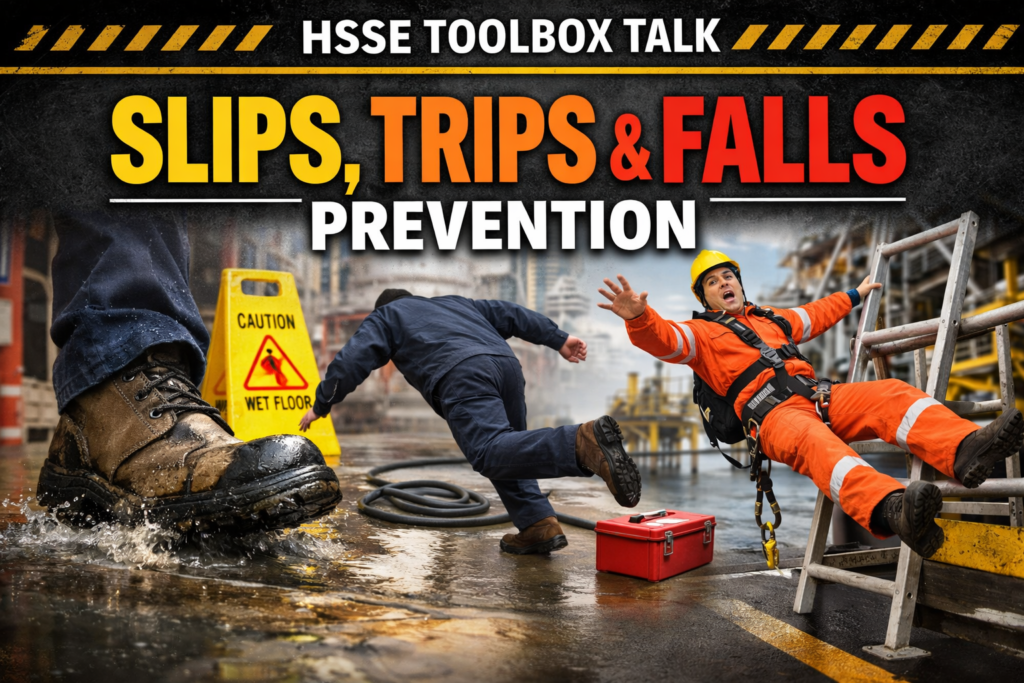
Slips, trips, and falls are among the most common causes of workplace injuries worldwide.
They can result in:
- Sprains, fractures, and head injuries
- Lost Time Injuries (LTI)
- Long-term musculoskeletal damage
- Production downtime and legal consequences
Most slip, trip, and fall incidents are preventable with good housekeeping, awareness, and safe behavior.
2. Understanding the Hazards
Slips
Occur when there is insufficient friction between footwear and the walking surface.
Common causes:
- Wet, oily, or greasy floors
- Mud, ice, or water on walkways
- Smooth or polished surfaces
- Inappropriate footwear
Trips
Happen when the foot strikes an object or uneven surface, causing loss of balance.
Common causes:
- Poor housekeeping
- Cables, hoses, or tools left on walkways
- Uneven flooring or damaged gratings
- Poor lighting
Falls
Occur when a person falls from height or same level.
Common causes:
- Unprotected edges or openings
- Missing or damaged handrails
- Unsafe use of ladders or stairs
- Rushing or distraction
3. High-Risk Areas
Be extra cautious in:
- Stairways and ladders
- Wet process areas and decks
- Entry and exit points
- Workshops and maintenance zones
- Areas with frequent hose or cable use
4. Prevention Measures – Everyone’s Responsibility
Good Housekeeping
- Keep walkways clear and tidy at all times
- Clean spills immediately and report them
- Store tools, hoses, and cables properly
Safe Walking Practices
- Always walk, never run
- Use designated walkways
- Avoid distractions (phones, rushing, carrying obstructive loads)
Footwear
- Wear approved, slip-resistant safety footwear
- Ensure footwear is in good condition
Stairs and Ladders
- Always use handrails
- Maintain three points of contact
- Do not carry loads that block your vision
Work at Height Controls
- Use fall protection where required
- Ensure edges are barricaded or protected
- Never bypass safety systems
5. Environmental & Engineering Controls
- Adequate lighting in all work areas
- Anti-slip coatings or mats where necessary
- Proper drainage to prevent water buildup
- Clearly marked walkways and hazard zones
6. Stop Work Authority (SWA)
If you identify:
- A spill that cannot be cleaned immediately
- Damaged flooring or handrails
- Unsafe access or working conditions
👉 Stop the job and report it immediately.
No task is more important than personal safety.
7. Key HSSE Takeaways
- Most slips, trips, and falls are 100% preventable
- Good housekeeping saves lives
- Proper footwear matters
- Awareness and safe behavior are critical
- Speak up before someone gets hurt
8. Toolbox Talk Discussion Questions
- Have you seen a slip, trip, or fall incident on site before?
- What was the root cause?
- What can we improve in our work area today?
9. Final Safety Message
“If you see it, fix it.
If you can’t fix it, report it.
If it’s unsafe, stop the job.”
Resources & Downloads:
Download the PDF version of toolbox talk
Stay alert. Walk safe. Go home injury-free.