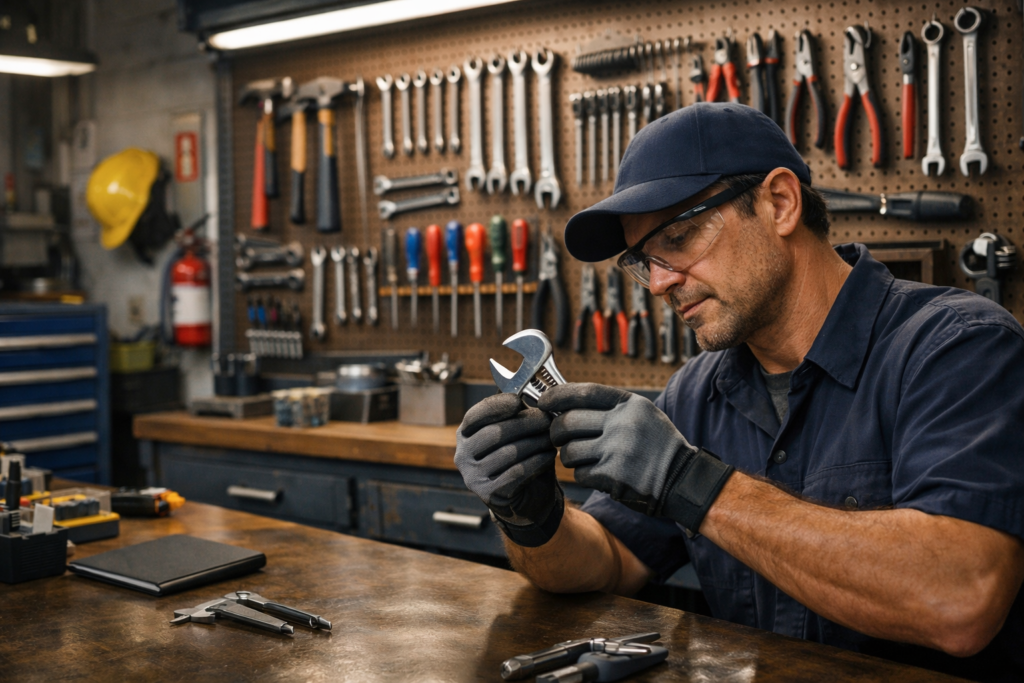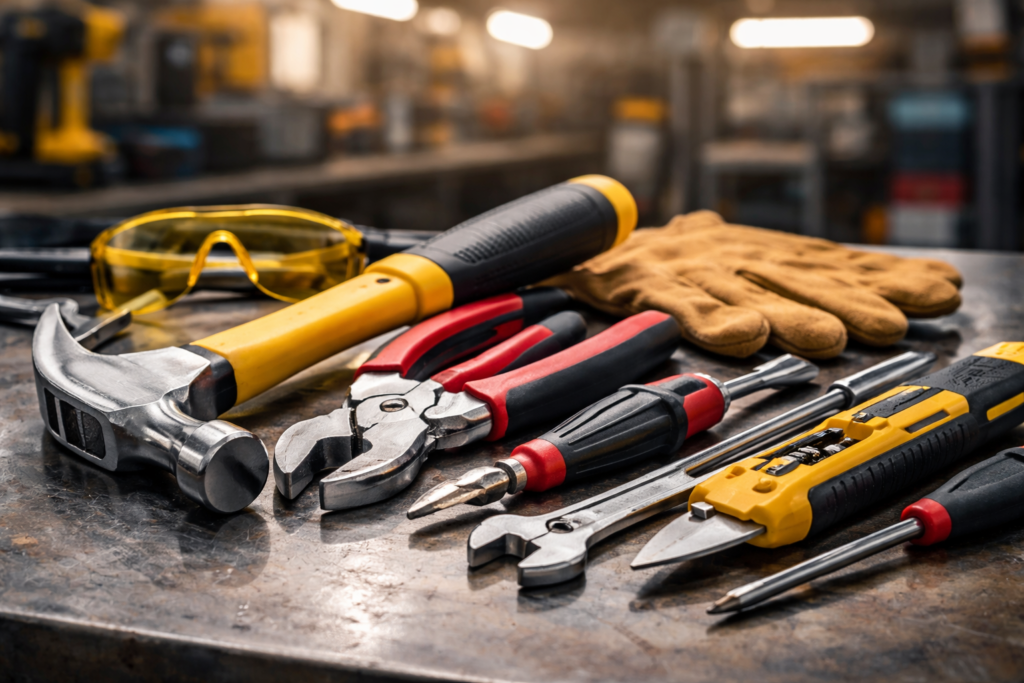
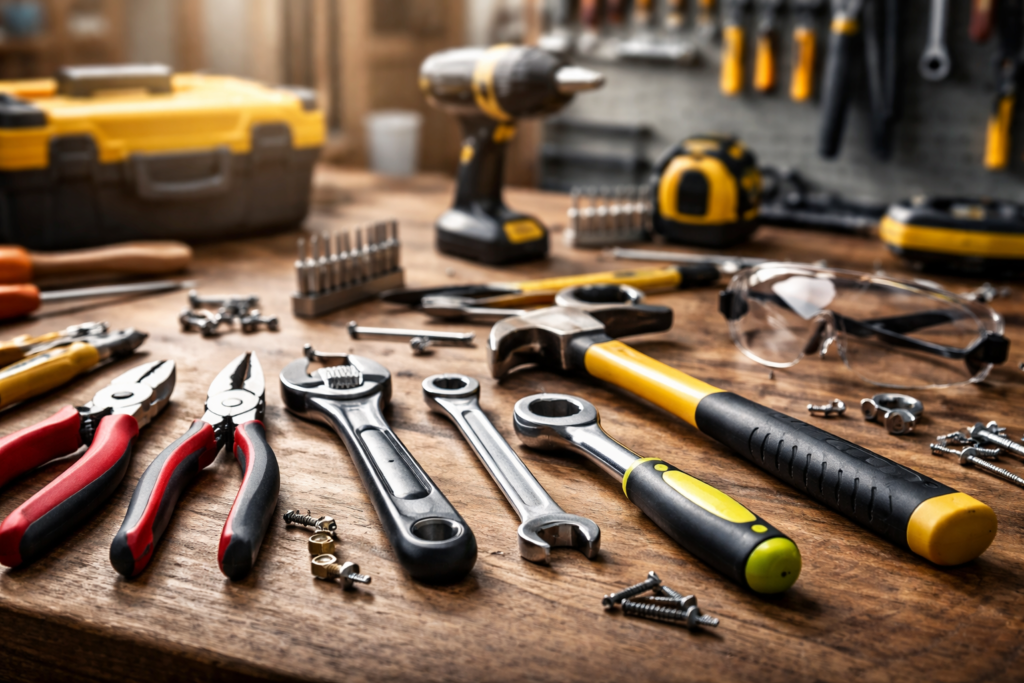
Selecting the right hand tool for a specific task is one of the most fundamental—but often overlooked—elements of workplace safety. Inadequate tool selection is a frequent root cause of hand injuries, musculoskeletal disorders, equipment damage, and near-miss incidents across construction sites, workshops, manufacturing plants, and offshore facilities.
From an HSSE perspective, the correct hand tool is not just about productivity—it is a critical control measure. Using the wrong tool can introduce unnecessary hazards, increase fatigue, compromise task quality, and violate safe work procedures.
This guide provides a practical, safety-focused framework for choosing the right hand tool for the job, improving efficiency while reducing injury risk. It is designed to support workers, supervisors, safety officers, and engineers, and complements the broader Tools & Equipment Safety pillar.
Why Hand Tool Selection Matters for HSSE Performance
Hand tools are involved in a high percentage of workplace injuries worldwide. Common incidents include:
- Cuts, punctures, and crush injuries
- Eye injuries from flying particles
- Strains and repetitive stress injuries
- Slips caused by poor grip or incorrect tool size
- Equipment damage leading to secondary hazards
In many investigations, the tool itself was not defective—the tool was simply wrong for the task.
Key HSSE Impacts of Poor Tool Selection
- Increased injury probability
- Reduced task control and precision
- Higher fatigue and ergonomic stress
- Extended job duration and exposure time
- Non-compliance with Permit to Work (PTW) and Job Hazard Analysis (JHA)
Choosing the right hand tool is therefore a preventive barrier in hazard control.
Understanding the Task Before Choosing a Tool
Before selecting any hand tool, the task must be clearly understood. This aligns with JHA and toolbox talk principles.
Ask These Critical Questions
- What is the exact task being performed?
- What material is involved (metal, wood, plastic, composite)?
- What force or torque is required?
- Is precision or speed the priority?
- Will the task be repetitive or one-off?
- Is the work at height, confined, or awkwardly positioned?
Only after answering these questions should tool selection begin.
Matching the Tool to the Job: Key Selection Criteria
1. Correct Tool Type
Never substitute tools. Each hand tool is engineered for a specific purpose.
Examples:
- Use a wrench, not pliers, for tightening bolts
- Use a screwdriver that matches the screw head type
- Use a hammer designed for the material (e.g., claw hammer vs ball-peen hammer)
Improvised tool use is a leading cause of hand injuries.
2. Proper Tool Size and Rating
Using the wrong size tool increases slippage risk and damages fasteners.
Safety considerations include:
- Correct jaw size for spanners and wrenches
- Screwdrivers that fit fully into screw heads
- Tools rated for the required load or torque
- Insulated tools for electrical work
Undersized tools often require excessive force, increasing injury risk.
3. Tool Condition and Integrity
Even the right tool becomes unsafe if poorly maintained.
Check for:
- Cracked handles
- Mushroomed chisel heads
- Worn grips
- Loose or damaged components
- Corrosion or deformation
Only use tools that have passed inspection in accordance with your site’s Inspection and Maintenance of Hand Tools procedures.
4. Ergonomics and User Comfort
Poor ergonomics lead to fatigue, reduced control, and long-term injury.
Look for:
- Non-slip, cushioned grips
- Balanced weight distribution
- Appropriate handle length
- Reduced vibration design
Ergonomically designed tools support productivity while reducing musculoskeletal disorders.
5. Environmental and Task-Specific Hazards
The work environment directly affects tool choice.
Consider:
- Non-sparking tools for flammable atmospheres
- Insulated tools for electrical work
- Corrosion-resistant tools for marine or offshore use
- Lightweight tools for overhead work
Environmental mismatch is a common cause of near misses in high-risk industries.
Common Hand Tool Selection Mistakes to Avoid
- Using makeshift tools (e.g., screwdrivers as chisels)
- Applying excessive force to compensate for the wrong tool
- Ignoring manufacturer load limits
- Using damaged or modified tools
- Selecting speed over safety
These shortcuts often lead to injuries, rework, and incident reports.
Role of Training and Supervision in Tool Selection
Proper tool selection is not intuitive—it requires training and reinforcement.
HSSE Best Practices
- Include tool selection guidance in toolbox talks
- Reference correct tools in JHAs and PTWs
- Encourage workers to stop work if the right tool is unavailable
- Supervisors should challenge unsafe tool use
- Maintain accessible, well-organized tool storage
A strong safety culture empowers workers to choose safety over convenience.
Recommended PPE and Safety Accessories
Correct tool selection should always be paired with appropriate PPE.
🔹 Cut-Resistant Work Gloves
Designed to protect hands from cuts, abrasions, and punctures during hand tool use.
👉 Check availability and specifications on Amazon
🔹 Safety Glasses with Impact Protection
Essential for protecting eyes from flying particles, debris, and tool fragments.
👉 View safety-rated options on Amazon
🔹 Insulated Hand Tool Sets
Ideal for electrical and maintenance tasks requiring added protection.
👉 Browse insulated hand tool kits on Amazon
🔹 Ergonomic Hand Tool Sets
Engineered to reduce fatigue and improve grip and control.
👉 Explore ergonomic hand tool options on Amazon
Disclosure: As an Amazon Associate, we may earn from qualifying purchases at no additional cost to you.
Linking Tool Selection to Incident Prevention
When analyzed through a Bow-Tie or barrier management lens, correct hand tool selection acts as a preventive control against:
- Loss of control of energy
- Human error during manual tasks
- Equipment failure
- Personal injury events
It should therefore be treated as a critical safety behavior, not a convenience choice.
Key Takeaways for Safe and Efficient Tool Selection
- Always understand the task before selecting a tool
- Use the correct tool type, size, and rating
- Never use damaged or improvised tools
- Consider ergonomics and environmental hazards
- Reinforce tool selection through training and supervision
The right hand tool protects people, preserves equipment, and improves operational efficiency.
Related Tools & Equipment Safety Topics
- Hand Tools Safety: Common Hazards and How to Prevent Injuries
- Proper Use of Hand Tools: Safety Rules Every Worker Must Know
- Inspection and Maintenance of Hand Tools for Workplace Safety
- Tools & Equipment Safety: A Complete Guide to Safe Use, Inspection, and Maintenance