
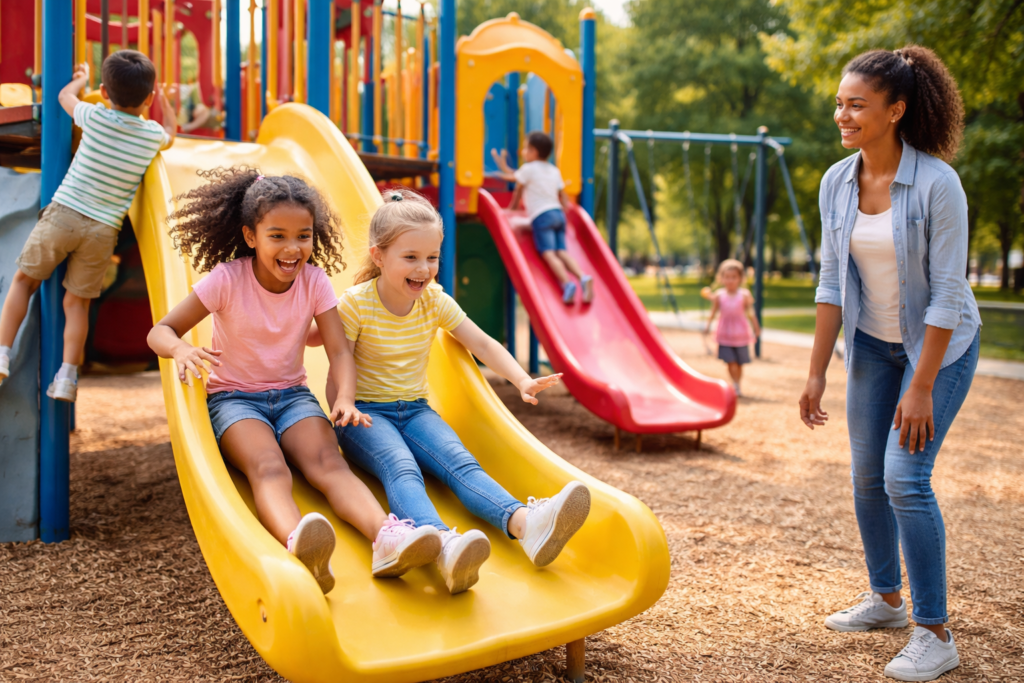
Playgrounds are vital spaces where children learn, socialize, and develop physical and cognitive skills. However, without proper supervision and safety awareness, playgrounds can also be common sites for childhood injuries. Falls, collisions, equipment misuse, and environmental hazards are among the leading causes of playground-related accidents.
This comprehensive guide outlines essential playground safety rules for children and caregivers, helping families, schools, and communities create safer play environments while still allowing children the freedom to explore and have fun.
Why Playground Safety Matters
According to child injury prevention studies, playground injuries are one of the most common causes of emergency room visits among children. Most of these injuries are preventable through:
- Proper supervision
- Age-appropriate equipment use
- Safe playground design
- Education on safe play behavior
Promoting playground safety protects children from serious harm while building lifelong habits around risk awareness and responsible behavior.
Common Playground Hazards to Watch For
Understanding potential hazards is the first step to prevention.
Physical Hazards
- Hard surfaces (concrete, asphalt)
- Broken or poorly maintained equipment
- Sharp edges, exposed bolts, or rusted parts
- Wet or slippery play areas
Behavioral Risks
- Running in crowded areas
- Pushing, shoving, or rough play
- Using equipment in unintended ways
- Overcrowding on swings or slides
Environmental Factors
- Extreme heat or sun exposure
- Poor lighting or visibility
- Animals, insects, or debris on the ground
Playground Safety Rules for Children
Teaching children simple, age-appropriate rules helps them play safely and confidently.
1. Use Equipment the Right Way
- Sit properly on swings and slides
- Slide feet first, never headfirst
- Hold handrails when climbing
- Do not climb on the outside of equipment
2. Play Only on Age-Appropriate Equipment
- Toddlers and older children should use separate play areas
- Avoid equipment that is too high or complex
3. Be Aware of Others
- Take turns on swings and slides
- Keep a safe distance from moving equipment
- Avoid pushing or roughhousing
4. Wear Proper Clothing
- No loose strings, scarves, or drawstrings
- Avoid jewelry or sharp accessories
- Wear well-fitting shoes with good grip
5. Follow Playground Rules
- Obey posted signs and instructions
- Listen to caregivers or supervisors
- Report broken equipment immediately
Playground Safety Rules for Parents and Caregivers
Active supervision and awareness are key responsibilities for adults.
1. Supervise Actively, Not Passively
- Stay close enough to intervene quickly
- Avoid distractions like phones or long conversations
- Maintain visual contact at all times
2. Inspect the Playground Before Play
- Check surfaces for adequate impact-absorbing materials (sand, rubber mulch)
- Look for broken, loose, or damaged equipment
- Ensure swings, slides, and ladders are secure
3. Match the Playground to the Child’s Age
- Choose playgrounds designed for your child’s age group
- Younger children need lower heights and simpler structures
4. Teach Safe Play Habits Consistently
- Reinforce rules calmly and clearly
- Explain why certain behaviors are unsafe
- Encourage children to speak up if something feels unsafe
5. Be Weather-Aware
- Avoid playgrounds during extreme heat, rain, or storms
- Check metal surfaces to prevent burns
- Ensure children stay hydrated
Safe Playground Design and Surfaces
Well-designed playgrounds significantly reduce injury risk.
Recommended Safety Surfaces
- Rubber tiles or poured-in-place rubber
- Wood chips or mulch
- Sand or pea gravel
Hard surfaces like concrete or asphalt should never be under play equipment.
Equipment Spacing and Layout
- Adequate spacing between structures
- Clear fall zones around swings and climbing frames
- Separate areas for different age groups
Playground Safety for Schools and Communities
Schools, daycare centers, and public parks share responsibility for playground safety.
Best Practices
- Regular inspections and maintenance schedules
- Clear safety signage and posted rules
- Staff training in playground supervision
- Incident reporting and corrective action
A proactive safety culture ensures that playgrounds remain inviting and secure for all children.
What to Do If a Playground Injury Occurs
Even with precautions, accidents can happen.
Immediate Response
- Stay calm and reassure the child
- Assess for serious injuries (head, neck, bleeding)
- Provide first aid if trained
- Seek medical help when necessary
Reporting
- Inform school or park authorities
- Report faulty equipment for immediate repair
Teaching Children About Risk Without Fear
Safe play doesn’t mean eliminating all risks—it means managing them wisely.
- Encourage exploration within safe limits
- Teach children to assess situations
- Praise responsible behavior and decision-making
This approach builds confidence, resilience, and safety awareness.
Frequently Asked Questions (FAQs)
What age should children start using playgrounds?
Children can start using playgrounds as early as 6–12 months with age-appropriate equipment and close supervision.
Are playground injuries common?
Yes, but most injuries are minor and preventable with proper supervision and safe playground design.
What is the safest playground surface?
Rubberized surfaces and deep mulch offer the best impact absorption.
How often should playgrounds be inspected?
Public and school playgrounds should be inspected regularly—ideally weekly and after severe weather.
Final Thoughts
Playgrounds should be places of joy, learning, and healthy development—not preventable injuries. By following clear playground safety rules for children and caregivers, families and communities can significantly reduce risks while preserving the fun and freedom of play.
Safety is a shared responsibility. When children are taught safe habits and adults remain attentive, playgrounds become safer spaces for everyone.
Back to School Safety Tips Every Parent Should Know




Pingback: Bullying Prevention Tips for Schools and Parents: A Child Safety–Focused, Whole-Community Guide - HSSE Tips