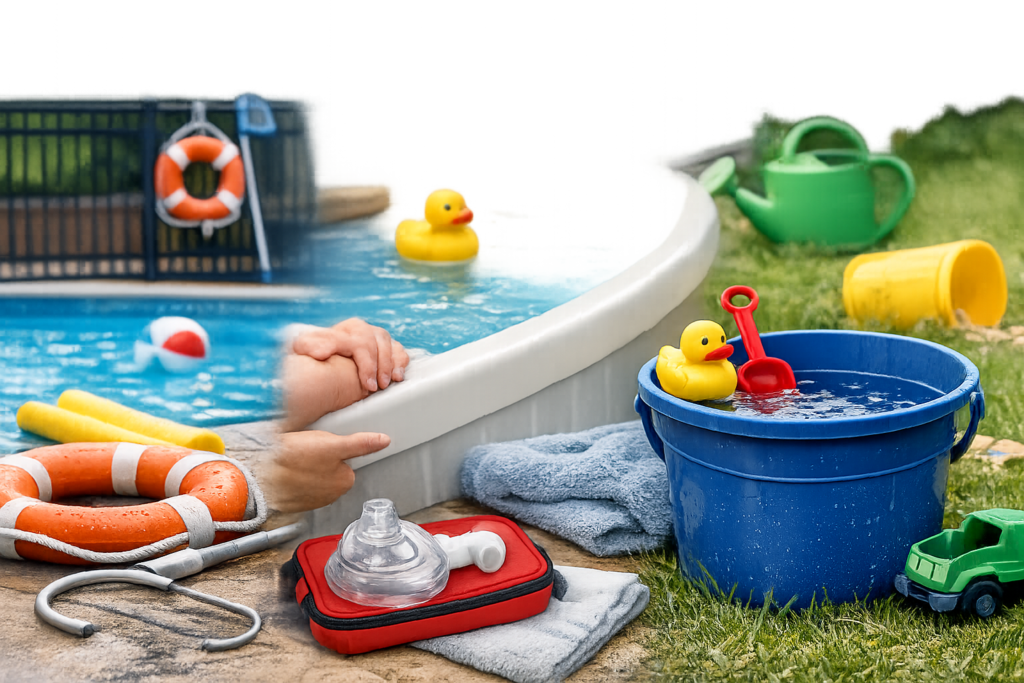
Drowning can happen quickly and quietly—often in everyday water sources that don’t look “dangerous”, like buckets, bathtubs, inflatable pools, and even water-filled containers in the yard. The good news is that most drowning incidents are preventable with the right layers of protection: active supervision, barriers, safer routines, and emergency preparedness.
This guide gives you clear, home-friendly steps to reduce risk in the places families use water most: baths, buckets, and pools.
Why buckets, baths, and pools are high-risk at home
Many families associate drowning only with beaches and large pools. But at home, risk is often tied to three things:
- Access: Kids can reach water fast—especially toddlers who explore and climb.
- Low water depth: Young children can drown in very shallow water if they lose balance or become trapped.
- Silence: Drowning is not usually loud or splashy. A child may be struggling without making noise.
Who is most at risk?
- Babies and toddlers (0–4 years): Highest risk at home due to mobility, curiosity, and limited balance.
- Young children (5–9 years): Risk increases with unsupervised play around pools and water toys.
- Teens: Risk rises with risky behaviour, overconfidence, and unsupervised swimming (especially in pools).
The “Layers of Protection” approach (the safest mindset)
Think of water safety like a seatbelt + airbags + safe driving. No single measure is enough. The best prevention uses multiple layers:
- Touch supervision (adult within arm’s reach for toddlers)
- Barriers (locks, gates, covers, fences)
- Safer routines (empty, drain, store, lock)
- Swimming skills (age-appropriate lessons)
- Emergency readiness (CPR knowledge, rescue plan, phone nearby)
Bucket safety: preventing drowning in water containers
Buckets are common in many homes—for cleaning, laundry, bathrooms, gardens, and construction. They’re also a major risk for toddlers because they can fall headfirst and have difficulty getting out.
Bucket drowning prevention checklist
- Empty buckets immediately after use—don’t “leave it for later”.
- Store buckets upside down and out of children’s reach.
- Keep lids on containers and secure them when possible.
- Never leave a filled bucket unattended, even for a minute.
- Use smaller containers when possible (less water, less risk).
- Keep bathroom/laundry doors closed and consider childproof doorknob covers.
Extra tips for common bucket locations
Laundry area
- Don’t soak clothes in open buckets where kids can access them.
- Use covered tubs or a lidded container stored behind a closed door.
Outdoor/yard
- After rain, empty buckets, basins, wheelbarrows, and toys that hold water.
- Check coolers and water storage drums for accessible openings.
- Cover or lock water tanks and storage containers.
Bath safety: safer routines for bathtubs, sinks, and baby baths
Bath time is a top-risk moment because children are near water, often undressed, and may be slippery. The key is constant attention and preparation.
Golden rules for bath time
- Stay in the bathroom the entire time.
- For babies and toddlers: keep a hand on them or remain within arm’s reach.
- Prepare everything before you start: towel, soap, clean clothes, nappies, lotion.
- Never leave siblings to “watch” a baby—they are not a substitute for an adult.
- If you must leave (even briefly), take the child with you, wrapped in a towel.
Safe bath setup
- Fill water to the minimum needed.
- Use non-slip mats in the tub and on the bathroom floor.
- Keep toilets closed and latched (toilet locks are inexpensive and effective).
- Install anti-scald controls or set the water heater temperature to reduce burn risk.
Avoid these common bath-time mistakes
- Phone calls or doorbells: ignore or take the child with you.
- “Just grabbing something”: get supplies first.
- Multi-tasking: bath time is not the time to clean, scroll, or answer messages.
Baby baths and sinks
- Use a baby bath on the floor (stable surface) rather than high counters.
- Never rely on bath seats as “hands-free” devices—they can tip.
- Keep the sink area clear of hazards and never step away.
Pool safety: fences, alarms, covers, and strict rules
Pools—above-ground, in-ground, inflatable, and temporary—need serious safety planning. The safest pool is one a child cannot access without an adult.
The most effective pool safety layers
1) Install a four-sided fence (best practice)
- The fence should fully separate the pool from the house and yard.
- Use a self-closing, self-latching gate.
- Keep gate latches high and out of children’s reach.
- Make sure climbable objects (chairs, toys) are not near the fence.
2) Use pool alarms and door alarms
- Door alarms for any doors that lead to the pool area.
- Pool surface/motion alarms add another layer.
3) Use pool covers the right way
- Use proper safety covers, not just “solar blankets” (which can be dangerous if a child becomes trapped).
- Remove pool toys after swimming—toys attract kids back to the pool.
4) Set strict pool rules for everyone
- “No swimming without an adult.” Always.
- “No running.” Slips are common.
- “No breath-holding games.” They can be deadly.
- “One designated water watcher” at a time—no shared responsibility.
Inflatable and temporary pools (high-risk because they’re underestimated)
- Drain immediately after use.
- Store deflated and out of reach.
- Do not leave water in them “for tomorrow”.
Supervision: what “active supervision” actually means
Many drowning incidents happen during non-swim times—when adults think kids aren’t near water.
Active supervision means:
- Eyes on child continuously
- Close enough to reach quickly
- No distractions (phones, cooking, conversations)
Use a “Water Watcher” system
When there are multiple adults around:
- Assign one adult as the Water Watcher
- They wear a tag/wristband to show responsibility
- Switch every 15–30 minutes to prevent fatigue
Swim lessons and water confidence: when and how to start
Swimming lessons are a powerful protective layer, but they don’t replace supervision.
- Start age-appropriate lessons when your child is ready (ask a paediatrician and choose qualified instructors).
- Focus on water comfort, floating, safe entry/exit, and basic strokes.
- Teach kids early: “Ask permission before going near water.”
Bathroom and home modifications that reduce drowning risk
Small changes can create big safety improvements:
- Toilet locks and keeping lids down
- Bathroom door childproofing
- Anti-slip flooring and grab bars in bathrooms
- High storage for buckets, basins, and cleaning containers
- Secure water storage (tanks, drums, barrels) with locked lids
Emergency readiness: what to do if a child is missing
When a child is missing, assume water first if you have a pool, bath, bucket, pond, or container nearby.
Immediate action steps
- Check the pool or water source first (seconds matter).
- Shout for help and have someone call emergency services.
- If you find the child in water, start rescue and begin CPR if needed (training is strongly recommended).
Tip: Keep a phone near the pool area (but not as a distraction during supervision).
Quick “Drowning Prevention” home checklist
Daily habits
- Empty buckets and containers after use
- Drain inflatable pools immediately
- Close bathroom doors and lock toilets
- Remove pool toys after swimming
Weekly checks
- Test pool gate latch and self-close function
- Confirm alarms work
- Inspect covers and barriers
- Walk your home/yard to find water-holding items
Every swim day
- Assign a Water Watcher
- Keep rescue equipment accessible (life ring, reaching pole)
- Enforce rules: no unsupervised swimming, no risky games
FAQs: Drowning prevention at home
Can a child drown in a small bucket or shallow water?
Yes. Young children can drown in shallow water if they fall in, lose balance, or cannot lift themselves out.
Are bath seats safe?
Bath seats can reduce slipping, but they are not a substitute for supervision and can tip. Always stay within arm’s reach.
Are inflatable pools safer than regular pools?
Not necessarily. They are often left filled and unattended, which increases risk. Drain and store them after each use.
What’s the best single prevention step for pools?
A four-sided fence with a self-closing, self-latching gate plus active supervision provides the strongest protection.
Do swimming lessons prevent drowning?
They help reduce risk and build skills, but they don’t replace supervision, barriers, and safer routines.
Key takeaways
- Treat all standing water—buckets, baths, and pools—as a serious hazard for young children.
- Use multiple safety layers: supervision + barriers + routines + skills + emergency readiness.
- Make safety easy: empty, drain, store, lock, and assign a water watcher around pools.
Back to Home Safety Tips for Babies and Toddlers