
Fire safety isn’t just for “emergencies”. It’s a set of everyday habits that help children stay calm, avoid danger, and respond fast if something goes wrong. The best time to teach fire safety is before there’s smoke, panic, or confusion—when learning can be simple, calm, and repeatable.
This guide shares clear, parent-friendly fire safety lessons you can teach at home, plus quick drills, checklists, and common mistakes to avoid.
Why Fire Safety Education Matters for Kids
Children are naturally curious, and many fire risks at home (stoves, candles, matches, chargers, and heaters) look harmless until they aren’t. Teaching fire safety helps children:
- Recognize hazards early
- Make safer choices around heat and electricity
- React quickly and correctly during an emergency
- Know exactly where to go and who to call
The goal is not to scare children—it’s to prepare them.
Start With Simple Fire Safety Rules (Kids Remember These)
Kids learn best with short, repeatable rules. Try these “home safety mantras”:
- “Fire is not a toy.”
- “Smoke is dangerous—get low and go.”
- “If the alarm beeps, we go outside.”
- “Outside first, then call for help.”
- “Never hide from smoke or fire.”
Repeat them during real-life moments—cooking, lighting a candle, charging devices, or using a heater.
Teach Children What Smoke Alarms Mean
Many children ignore alarms because they think they’re “just noise”. Help them understand:
What a smoke alarm sound means
- It means leave immediately (not “look around” or “wait”).
- It’s not a game or a test—treat it seriously every time.
What kids should do when they hear the alarm
- Stop what you’re doing
- Go to the nearest safe exit
- Meet at the family meeting point outside
- Stay outside
Tip: Let kids hear the alarm during a calm “practice moment” so it feels familiar, not terrifying.
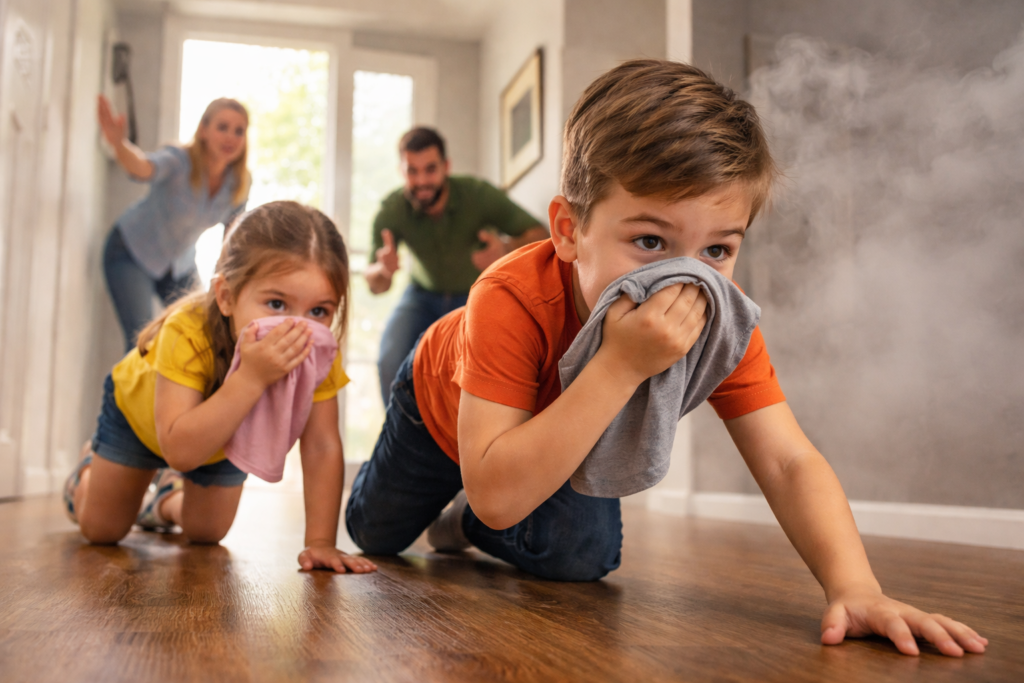
“Get Low and Go” (The Most Important Skill)
Smoke rises, and cleaner air is usually closer to the floor.
Teach your child:
- If they see smoke or smell burning: get low (crouch or crawl)
- Cover mouth and nose with a sleeve or cloth if possible
- Move quickly to the exit
Make it a game during practice (without jokes during real alarms):
“Show me your low-and-go crawl to the door.”
Teach Kids How to Leave—Not How to Fight a Fire
Children should never try to put out a real fire. Make this very clear:
Kids should:
- Leave the house fast
- Tell an adult immediately
- Never go back inside
Kids should NOT:
- Throw water on stove/grease fires
- Look for pets or toys during evacuation
- Try to hide under beds or in closets
- Stop to grab phones, tablets, or shoes
Create a Simple Home Fire Escape Plan (And Practice It)
A plan turns panic into action.
Step 1: Show two ways out of each room
Teach your child the primary and backup exit routes:
- Door
- Window (if safe and age-appropriate)
For younger children, focus mainly on the door route and the idea of “follow the grown-up”.
Step 2: Choose a family meeting point outside
Pick something visible and safe, like:
- The front gate
- A specific tree
- A neighbor’s porch
- The end of the driveway
Rule: Everyone goes there and stays there.
Step 3: Practice twice a year
Do one drill in the daytime and one at night.
- Keep it short
- Keep it calm
- Praise effort, not speed
Teach Children Never to Hide During a Fire
This is one of the most important lessons for younger kids.
Explain in simple language:
- “Firefighters can’t find you if you hide.”
- “Your job is to get outside so we can all be safe together.”
Practice:
Play a “find the exit” drill instead of hide-and-seek during safety lessons.
Teach the “Do Not Touch” Heat Zones
Children often get burnt from everyday items, not big fires.
Show them “hot zones” and create clear boundaries:
- Stove and oven area
- Kettle, pots, and hot oil
- Iron and hair tools
- Heaters and generators
- Fireplaces, candles, charcoal grills
Simple rule: “Ask before you touch.”
Cooking Safety Lessons Every Child Should Learn
Even young children can learn safe habits:
- Keep towels and paper away from the stove
- Never reach over a pot or pan
- Don’t play in the kitchen during cooking
- Tell an adult if they smell gas or burning
- Older kids using microwaves: use microwave-safe containers, avoid metal
For teens learning to cook:
- Stay in the kitchen while cooking
- Turn pot handles inward
- Keep oil temperatures controlled
- Know how to switch off heat quickly
Teach Fire Safety Around Matches, Lighters, Candles, and Incense
Many home fires begin with small flames.
Teach children:
- Matches and lighters are adult-only tools
- Candles and incense should never be left unattended
- Keep flames away from curtains, paper, and clothes
- Never light anything “to try it out”
If your child finds matches/lighters:
- Do not touch
- Tell an adult immediately
Electrical Safety Rules Kids Can Understand
Electricity can cause fires when misused. Teach these habits:
- Don’t overload sockets or extension boards
- Don’t use damaged chargers or frayed wires
- Keep liquids away from plugs
- Don’t charge devices under pillows or on beds
- Turn off appliances when not in use (age-appropriate)
Parent tip: Make device charging a routine—charging station on a hard surface, away from bedding and curtains.
What to Do If Clothes Catch Fire (Teach the Phrase, Not the Fear)
Teach a simple, memorable response:
- Stop
- Drop
- Roll
Keep it calm and factual:
- “If something is burning on your clothes, don’t run. Running feeds the fire. Stop, drop, and roll.”
Practice gently on carpet or a mat—no scary stories needed.
Teach Children What to Do If They Smell Smoke
Kids may smell smoke before adults do.
Teach:
- Tell an adult immediately
- If they are alone and see smoke: leave and go to the meeting point
- If the smoke alarm sounds: leave right away
Teach Kids Emergency Communication
This makes a big difference when adults are not nearby.
Children should know:
- Their full name
- Parent/guardian full name
- Home address (or a nearby landmark)
- A trusted phone number
- How to call local emergency services
Practise role-play:
- “What’s your address?”
- “What happened?”
- “Where are you now?”
Keep it short, calm, and repeat monthly.
Fire Safety Habits Parents Should Model Daily
Kids copy what they see. The fastest way to teach fire safety is to live it:
- Don’t leave cooking unattended
- Keep candles away from kids and pets
- Switch off gas and appliances after use
- Replace faulty cords/chargers
- Keep exits clear (no blocked doors or hallways)
- Store matches/lighters high and locked
Common Fire Safety Mistakes Parents Make (And How to Fix Them)
- Only teaching once → Fix: short reminders monthly
- No escape plan → Fix: a simple plan + meeting point today
- Kids don’t know alarm sound → Fix: controlled alarm “listen” session
- Cluttered exits → Fix: clear hallways and doorways weekly
- Charging on beds → Fix: a proper charging station
Quick Home Fire Safety Checklist for Parents
Use this as a practical weekly/monthly reminder:
- Smoke alarms tested regularly
- Two clear exit paths (where possible)
- Family meeting point chosen and known
- Matches/lighters stored safely
- The charging station is safe (hard surface, ventilated)
- The stove area is a “no-play zone”
- Kids know: Get low and go
- Kids know: Don’t hide and don’t go back inside
Frequently Asked Questions
At what age should I teach fire safety?
Start as early as toddler age with simple rules: “Hot—don’t touch,” “Alarm means go outside.” Add more detail as they grow.
How often should we practise a fire drill at home?
At least twice a year, plus quick refreshers whenever you change rooms, furniture, or living arrangements.
How do I teach fire safety without scaring my child?
Keep it calm and practical. Use short phrases, role-play, and reassurance: “This is just practice so we know what to do.”
What should kids do if they can’t get out?
Teach them to go to the safest available exit. If blocked, they should stay together, alert an adult, and try to get attention from a window. (Parents should tailor this to the home layout and the child’s age.)
Final Thoughts
Fire safety lessons work best when they’re simple, repeated, and practised. Teach the basics, build a clear escape plan, and run calm drills so your child knows exactly what to do. Prepared children are not frightened children—they’re safer children.




Pingback: Home Safety Tips for Babies and Toddlers: A Complete Parent’s Guide - HSSE Tips