The kitchen is where families gather—but it’s also one of the most hazard-filled rooms for children. Hot surfaces, sharp tools, heavy objects, cleaning chemicals, choking hazards, and electricity all exist in the same busy space. The good news: you can dramatically reduce risk with smart layout choices, reliable barriers, safe storage, and simple daily routines.
This guide gives you professional, practical kitchen safety tips for homes with children—so you can cook with confidence while keeping curious hands protected.
Why the Kitchen Is High-Risk for Children
Children learn by exploring. In the kitchen, that exploration can quickly lead to injuries because:
- Heat sources (stoves, ovens, kettles, hot liquids) can cause burns in seconds.
- Sharp tools (knives, graters, peelers) are easy to reach if left out.
- Heavy objects (pots, appliances) can tip or fall.
- Chemicals and medicines may be stored under sinks or on counters.
- Small foods and objects can become choking hazards.
- Slippery floors increase the risk of falls, especially during spills.
A safer kitchen starts with thinking like a child: What can they reach, pull, climb, or put in their mouth?
Start With Zones: The Easiest Way to Reduce Accidents
Creating “safe zones” and “no-go zones” reduces chaos and prevents split-second accidents.
1) Establish a “Kid-Free Cooking Zone”
Pick a boundary around the stove and prep areas (about 1 meter / 3 feet is a common guideline). Teach children that when an adult is cooking, they stay out of that zone.
Practical ways to set it up:
- Use floor tape temporarily (great for toddlers learning boundaries).
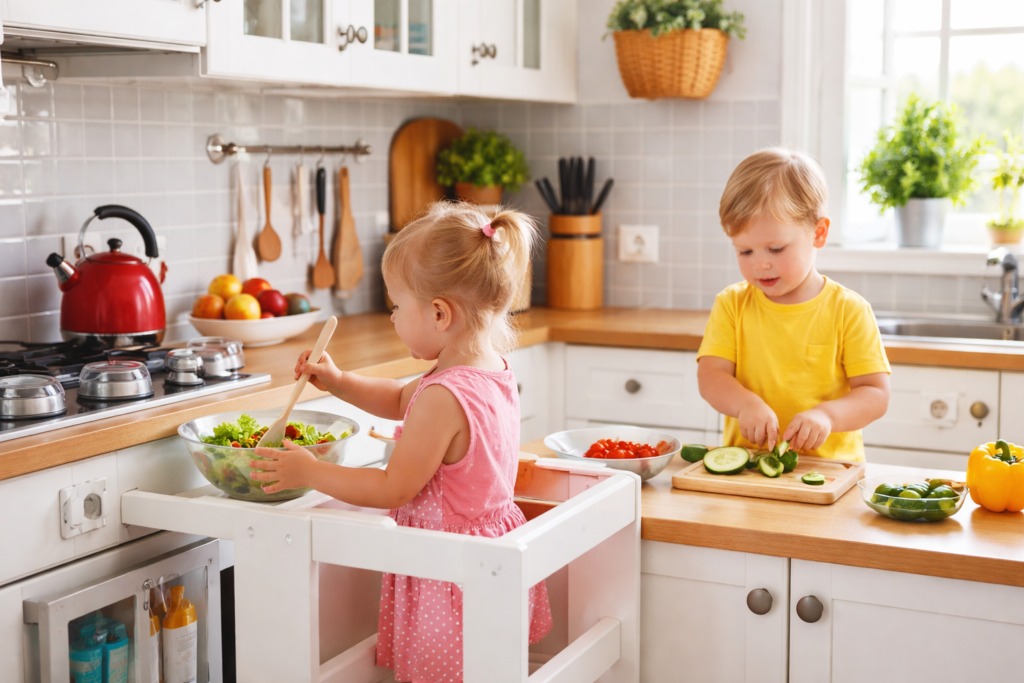
- Place a child-safe learning tower at a safe distance for supervised “helping.”
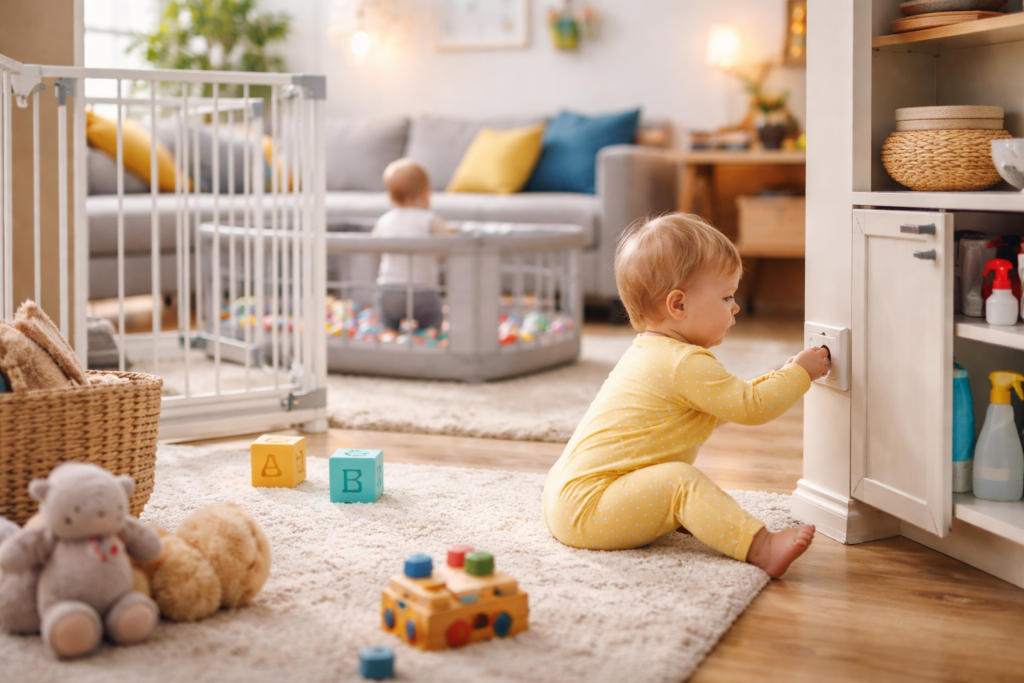
- Use a baby gate to block the kitchen during peak cooking times (especially for toddlers).
2) Create a “Yes Zone”
Kids are more likely to follow rules when they have a safe place to stand or sit.
- Set a small table for coloring/snacks away from the stove.
- Give them safe utensils (silicone spatula, plastic measuring cups) to “help” under supervision.
Burn and Scald Prevention (The #1 Kitchen Injury Risk)
Burns happen fast, especially from hot liquids and stove surfaces.
3) Turn Pot Handles Inward—Every Time
A child can grab a handle and pull down boiling water or hot soup. Always turn handles inward and toward the back of the stove.
4) Use the Back Burners First
Cook on the back burners whenever possible. It keeps heat and hot cookware farther from small hands.
5) Keep Hot Drinks and Soups Off the Edge
Never place hot tea, coffee, or soup on low tables, counter edges, or within reach of a high chair tray grab.
Extra tip: Avoid tablecloths and long placemats that a child can yank.
6) Control Appliance Cords
Toddlers often pull cords. Keep cords:
- Short and behind appliances
- Away from counter edges
- Not dangling near sinks or stovetops
Appliances to watch: kettles, rice cookers, blenders, air fryers, slow cookers.
7) Block Oven and Stove Access
- Use stove knob covers (especially for front-facing knobs).
- Consider an oven door lock.
- Teach kids that the oven door is not a step or a “seat.”
8) Be Careful With Steam
Steam burns can be severe. Open lids and microwave containers away from your face and away from children. Keep kids out of the kitchen when draining pasta or opening a steamer.
Prevent Cuts: Knives, Glass, and Hidden Sharp Edges
9) Store Knives Properly (Not in Drawers Kids Can Open)
Use:
- A high-mounted magnetic strip (out of reach)
- A locked drawer
- A knife block placed far back on the counter (still less ideal than locked storage)
10) Lock “Tool Drawers”
Toddlers love drawers. Use child locks on drawers with:
- Knives and scissors
- Can openers and peelers
- Graters and skewers
- Spare blades and box cutters
11) Use Shatter-Resistant Options Where You Can
Swap breakable items for safer alternatives:
- Acrylic cups/plates for kids
- Unbreakable mixing bowls (stainless or silicone)
- Store glassware high and back from edges
Poison Prevention: Cleaning Chemicals, Medicines, and Dishwasher Pods
Many homes store chemicals under the sink—which is exactly where toddlers go.
12) Lock Under-Sink Cabinets
Store chemicals and detergents in a locked cabinet, preferably high. This includes:
- Bleach and disinfectants
- Drain cleaners
- Dishwashing liquids and pods
- Oven cleaners
- Pest sprays
Important: Dishwasher pods can look like candy to children. Treat them like medications: locked away, not left out.
13) Keep Medicines Out of the Kitchen (If Possible)
Avoid storing medicines on counters or in accessible cabinets. If you must store them in the kitchen, keep them in a locked, high cabinet.
14) Don’t Rely on “Child-Resistant” Caps
Child-resistant is not child-proof. Always store hazardous products locked and out of reach.
Choking Hazard Control: Food Safety for Little Ones
Children under 4 are especially at risk for choking.
15) Cut High-Risk Foods Correctly
Common choking hazards include grapes, cherry tomatoes, sausages, popcorn, nuts, hard candies, and chunks of apple or carrot.
Safer prep habits:
- Grapes/cherry tomatoes: cut lengthwise into quarters
- Sausages/hot dogs: cut lengthwise, then into small pieces
- Apples/carrots: cook until soft or shred/grate
- Nut butter: thinly spread (avoid thick spoonfuls)
16) Supervise Eating—Especially While Cooking
Kids wandering with food in their mouth is risky. Make a simple rule: sit to eat. No running, playing, or climbing while chewing.
17) Keep Small Objects Off Counters
Remove or store:
- Toothpicks
- Bottle caps
- Magnets
- Coins
- Small batteries (button batteries are especially dangerous)
- Refrigerator magnets that can pop off
Electrical and Fire Safety
18) Use Outlet Covers and Keep Appliances Unplugged
Unplug small appliances when not in use, especially if cords are accessible. Use outlet covers for unused outlets.
19) Keep the Stove and Counter Clear
Grease, paper towels, curtains, and packaging near the stove can catch fire. Keep flammables away from burners.
20) Maintain Smoke Alarms and Keep a Fire Extinguisher
- Test smoke alarms regularly.
- Keep a suitable home fire extinguisher accessible (but out of children’s reach).
- Make sure adults in the home know how to use it.
21) Teach Kids “Hot” and “Stop”
Even toddlers can learn simple safety words:
- “Hot” = don’t touch
- “Stop” = freeze
- “Back” = step away from the stove
Repeat calmly and consistently.
Prevent Slips, Trips, and Falls
22) Clean Spills Immediately
Spills are unavoidable in family kitchens. Keep:
- A dedicated spill cloth or paper towels handy
- A non-slip mat near the sink (choose one that lies flat and doesn’t curl)
23) Avoid Climbing Temptations
Kids climb to reach interesting items. Reduce climbing risk by:
- Storing snacks in a child-safe drawer (so they don’t climb for them)
- Keeping chairs away from counters
- Not leaving attractive objects (cookies, colorful cups) at the edge
24) Secure Heavy Items
Store heavy pots, small appliances, and large glass containers low but locked—or higher up in stable cabinets if possible. Avoid stacking heavy items where they can fall.
Safe Routines That Make a Big Difference
25) “Kitchen Reset” Before You Leave the Room
Whenever you step away (even for 30 seconds):
- Turn pot handles in
- Move hot items to the back
- Keep knives away
- Make sure no cords are dangling
26) Use a “One-Hand Rule” for Toddlers
If a toddler is in the kitchen, keep one hand available to respond quickly—especially when handling hot liquids or sharp objects.
27) Never Cook While Holding a Child
It’s tempting, but dangerous. Hot splashes, steam, and sharp edges are too risky. Place the child safely in a high chair, playpen, or behind a gate before cooking.
Childproofing Checklist (Quick Reference)
Stove & Heat
- Pot handles turned inward
- Back burners used first
- Knob covers installed (if needed)
- Oven lock fitted (if needed)
- Hot drinks kept away from edges
Cuts & Tools
- Knife storage is locked or out of reach
- Tool drawers have child locks
- Glassware stored high and stable
Chemicals & Poisoning
- Under-sink cabinet locked
- Dishwasher pods locked away
- Medications stored high/locked
Choking
- High-risk foods cut safely
- Small objects cleared from counters
- Kids sit while eating
Falls & Fire
- Spills cleaned immediately
- Non-slip mat used
- Smoke alarm tested
- Fire extinguisher accessible to adults
What to Do in an Emergency (Keep This Simple and Visible)
Accidents can still happen. Prepare calmly:
- Keep emergency numbers saved on your phone.
- Learn basic first aid for burns and choking (especially if you have toddlers).
- If a child is choking, act immediately—don’t wait to “see if it passes.”
(For training, consider a certified first-aid course in your area so you’re confident in real situations.)
Frequently Asked Questions
What is the most common kitchen hazard for children?
Burns and scalds—often from hot drinks, pots pulled by handles, or contact with hot surfaces.
Are baby gates effective for kitchen safety?
Yes. Gates are one of the simplest ways to keep toddlers out during cooking, when risk is highest.
Where should I store cleaning chemicals?
Locked and out of reach—preferably in a high cabinet. If stored under the sink, that cabinet should be child-locked.
When can children start helping in the kitchen?
Children can help early, but only with age-appropriate tasks and close supervision. Start with safe roles like washing vegetables, stirring cold mixtures, or setting the table away from the stove.
Do I need stove guards and knob covers?
If your stove has front knobs or your child can reach them, knob covers can reduce risk. Stove guards can also help prevent children from reaching hot burners or pulling pots.
Conclusion: Make Safety a Habit, Not a One-Time Setup
A child-safe kitchen is built on two things: smart barriers (locks, gates, safe storage) and consistent routines (handles in, cords back, hot items away). You don’t need a perfect home—you need a safer system that works every day, even when you’re busy.
Back to Home Safety Tips for Babies and Toddlers