

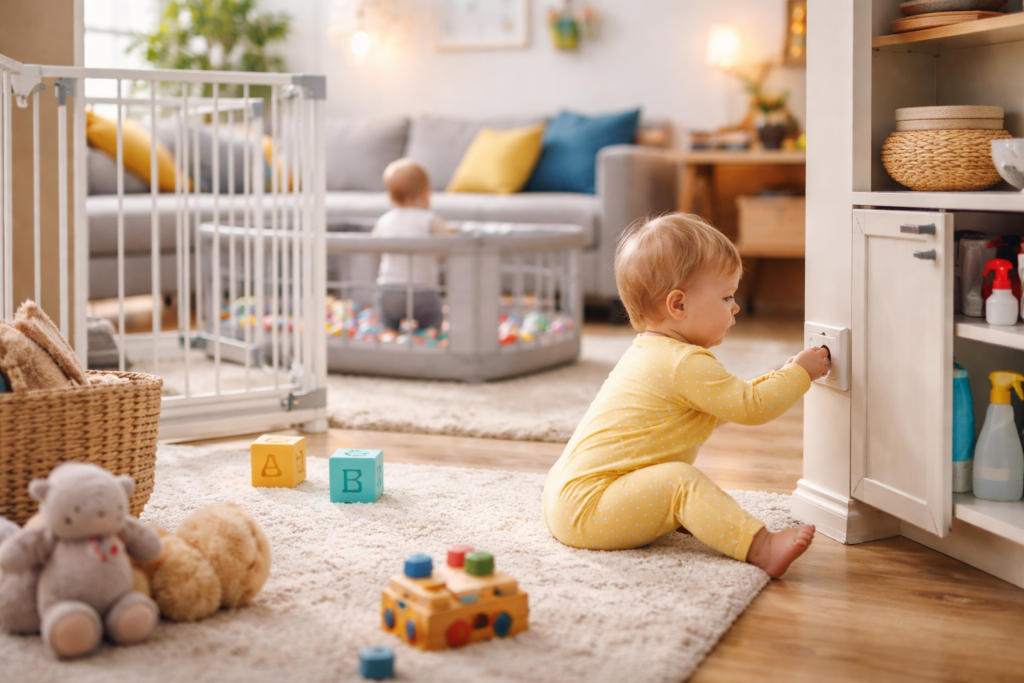
Babies and toddlers are naturally curious and active and are still developing coordination and judgement. As they learn to crawl, walk, climb, and explore, ordinary household items can quickly become serious safety hazards. From falls and burns to poisoning and choking, many childhood injuries happen at home—and most are preventable.
This guide provides practical, age-appropriate home safety tips for babies and toddlers, helping parents and carers create a safer environment where young children can grow, learn, and explore with reduced risk.
Why Home Safety Is Critical for Babies and Toddlers
Children under five years old are at the highest risk of home-related injuries due to:
- Limited awareness of danger
- Poor balance and coordination
- Tendency to put objects in their mouths
- Dependence on adults for supervision
A proactive approach to home safety significantly reduces injuries and gives parents peace of mind.
General Home Safety Principles
Before focusing on specific rooms, apply these universal safety rules:
- Never leave babies and toddlers unattended
- Supervise children closely, especially during play
- Use age-appropriate safety equipment
- Regularly inspect your home for hazards
- Teach simple safety habits as children grow
Living Room Safety Tips
The living room often contains furniture and electronics that pose risks.
Common Hazards
- Sharp furniture edges
- Unstable TVs and shelves
- Small objects that cause choking
- Electrical cords
Safety Tips
- Secure TVs and furniture to the wall
- Use corner guards on tables and shelves
- Keep small items out of reach
- Hide or secure electrical cords
Bedroom and Nursery Safety
Bedrooms should be calm, clutter-free, and designed for safe rest.
Crib and Sleep Safety
- Use a firm mattress with a fitted sheet
- Avoid pillows, toys, and loose bedding in cribs
- Place babies on their backs to sleep
Additional Tips
- Keep cords from blinds and curtains out of reach
- Install night lights to prevent falls
- Anchor dressers and wardrobes
Kitchen Safety Tips
The kitchen is one of the most dangerous areas for young children.
Common Risks
- Hot surfaces and liquids
- Sharp objects
- Cleaning chemicals
Safety Measures
- Use stove guards and turn pot handles inward
- Keep knives and utensils locked away
- Store cleaning products in locked cabinets
- Never hold a child while cooking
Bathroom Safety Tips
Water and slippery surfaces make bathrooms especially hazardous.
Key Risks
- Drowning in bathtubs or buckets
- Slips and falls
- Poisoning from toiletries
Safety Tips
- Never leave a child unattended in the bath
- Empty buckets and bathtubs immediately after use
- Use non-slip mats
- Store medicines and toiletries securely
Staircase and Fall Prevention
Falls are a leading cause of injury in toddlers.
Prevention Tips
- Install safety gates at the top and bottom of stairs
- Use handrails and good lighting
- Keep stairs clear of toys and clutter
Electrical Safety for Young Children
Safety Tips
- Cover unused electrical outlets
- Keep appliances unplugged when not in use
- Avoid running cords under carpets
Poison Prevention at Home
Common Sources
- Medicines
- Cleaning products
- Cosmetics
Prevention Measures
- Store all chemicals and medicines in locked cabinets
- Use child-resistant packaging
- Never call medicine “candy”
Choking and Suffocation Prevention
Common Hazards
- Small toys and objects
- Plastic bags
- Certain foods
Safety Tips
- Keep small objects out of reach
- Cut food into small pieces
- Avoid giving hard foods to toddlers
Fire and Burn Safety
Safety Tips
- Keep matches and lighters locked away
- Install smoke alarms and test them regularly
- Keep hot drinks away from children
Window and Balcony Safety
Safety Tips
- Install window guards or stops
- Keep furniture away from windows
- Never leave children alone on balconies
Creating a Safe Play Environment
- Choose age-appropriate toys
- Inspect toys regularly for damage
- Supervise playtime
Teaching Safety Habits Early
As toddlers grow, simple lessons help reduce risk:
- Teach them not to touch hot surfaces
- Encourage them to sit while eating
- Introduce basic rules like “stop” and “no”
Emergency Preparedness for Parents
- Keep emergency contacts visible
- Learn basic first aid and CPR
- Have a stocked first aid kit at home
Frequently Asked Questions (FAQs)
When should I start childproofing my home?
Before your baby starts crawling—usually around 4–6 months.
Is constant supervision enough?
Supervision is essential, but physical safety controls are equally important.
How often should I review home safety?
Regularly, especially as your child reaches new developmental stages.
Conclusion
Home safety for babies and toddlers is about anticipation, preparation, and consistent supervision. By identifying hazards early and applying simple safety measures, parents and carers can prevent most common injuries.
This guide serves as a practical foundation for childproofing your home, helping create a safer environment where babies and toddlers can explore confidently and grow safely.
Related Topics:
- Childproofing Your Home: A Room-by-Room Safety Guide
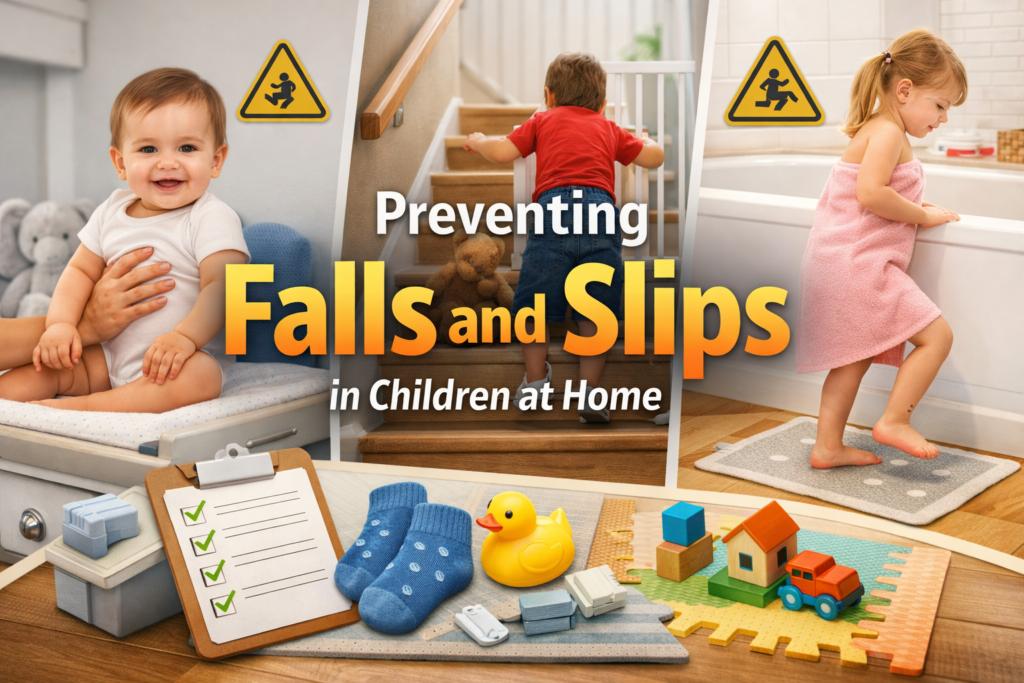
- Preventing Falls and Slips in Children at Home
- Kitchen Safety Tips for Homes With Children
- Fire Safety Tips Every Parent Should Teach Their Child
- Electrical Safety at Home: Protecting Children From Shock
- Preventing Burns and Scalds in Children (Complete Home Safety Guide)
- Poison Prevention: Keeping Medicines and Chemicals Away From Children
- Drowning Prevention Tips for Homes With Buckets, Baths, and Pools
- Toy Safety Tips: How to Choose Safe Toys for Children of All Ages



Pingback: Fire Safety Tips Every Parent Should Teach Their Child (Age-Appropriate, Practical, and Life-Saving) - HSSE Tips
Pingback: Electrical Safety at Home: Protecting Children From Shock (Room-by-Room Guide) - HSSE Tips
Pingback: Preventing Burns and Scalds in Children (Complete Home Safety Guide) - HSSE Tips