
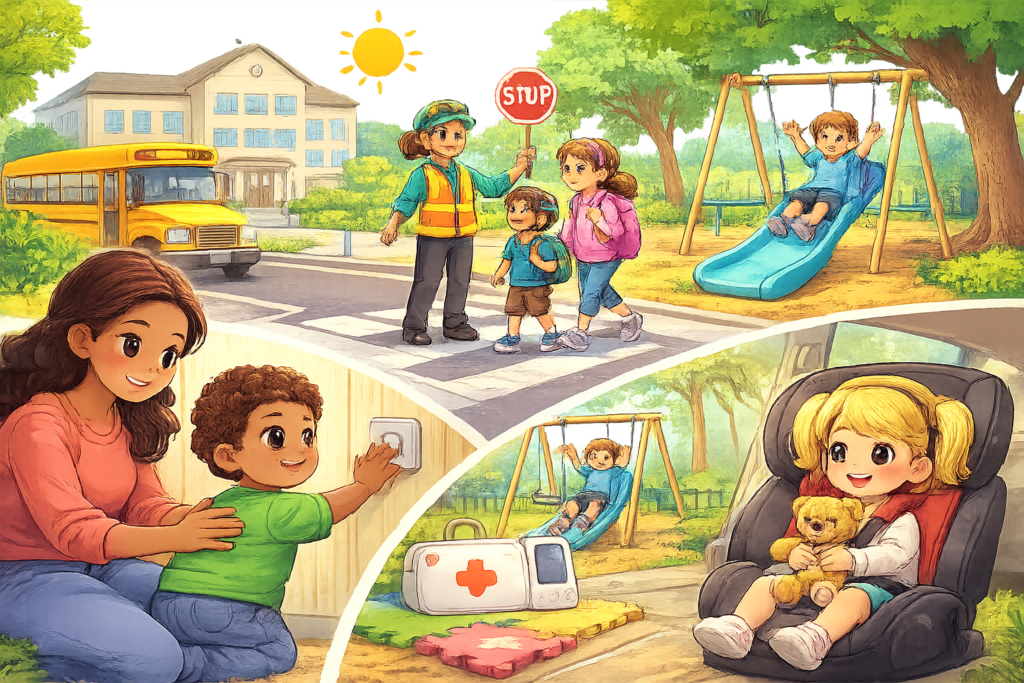
Why Child Safety Matters
Child safety is a shared responsibility that involves parents, caregivers, educators, communities, and policymakers. Children are naturally curious, still developing judgment, and often unaware of hazards around them. Without proper safeguards, everyday environments—homes, schools, roads, playgrounds, and digital spaces—can expose children to preventable injuries, abuse, or long-term harm.
This pillar page provides a comprehensive, practical, and evidence-based guide to child safety, covering physical, emotional, digital, and environmental risks. It is designed as a central resource from which you can explore detailed child safety topics in depth.
What Is Child Safety?
Child safety refers to the policies, practices, behaviors, and protective measures put in place to prevent injury, abuse, neglect, exploitation, and exposure to harmful situations affecting children from infancy through adolescence.
Child safety focuses on:
- Injury prevention
- Safe environments
- Emotional and psychological protection
- Education and awareness
- Emergency preparedness
A strong child safety culture is proactive, not reactive—it anticipates risks and eliminates them before harm occurs.
Key Principles of Child Safety
1. Prevention First
Preventing hazards is always more effective than responding after an incident. Safe design, supervision, and education are the foundation of child safety.
2. Age-Appropriate Protection
Safety risks vary by age. What protects a toddler may differ from what protects a teenager.
3. Layered Controls
Effective child safety uses multiple layers of protection—environmental controls, supervision, rules, and education.
4. Shared Responsibility
Parents, schools, caregivers, communities, and governments all play a role in keeping children safe.
Child Safety at Home
The home is where children spend most of their time—and where many injuries occur.
Common Home Hazards
- Falls from stairs, windows, and furniture
- Burns from hot liquids, stoves, and electrical appliances
- Poisoning from medications, chemicals, and cleaning products
- Drowning in bathtubs, buckets, and water containers
- Choking on small objects
Home Safety Best Practices
- Install safety gates, window guards, and handrails
- Store medicines and chemicals in locked cabinets
- Use child-resistant packaging
- Cover electrical outlets and secure cords
- Never leave young children unattended near water
Related Articles to Link:
- Home Safety Checklist for Parents
- Preventing Childhood Burns and Scalds
- Poison Prevention at Home
Child Safety at School and Daycare
Schools and childcare centers must provide a safe learning environment that supports both physical and emotional well-being.
Key School Safety Areas
- Safe classrooms and playgrounds
- Supervised activities and transitions
- Bullying prevention
- Fire safety and emergency drills
- Health and hygiene practices
Best Practices
- Clear child protection policies
- Trained teachers and caregivers
- Secure access control and visitor management
- Anti-bullying programs
- First aid and emergency response readiness
Related Articles to Link:
- School Safety Management Systems
- Bullying Prevention and Child Protection
- Emergency Preparedness in Schools
Road and Transportation Safety for Children
Road traffic injuries are a leading cause of serious harm to children worldwide.
Key Risks
- Unsafe pedestrian behavior
- Improper use of car seats or seat belts
- Motorcycle and bicycle accidents
- School bus incidents
Safety Measures
- Age-appropriate car seats and booster seats
- Seat belt use at all times
- Helmets for bicycles and motorcycles
- Teaching children road-crossing rules
- Safe school transport policies
Related Articles to Link:
- Child Car Seat Safety Guide
- Teaching Road Safety to Children
- School Bus Safety Rules
Playground and Outdoor Safety
Outdoor play is essential for development, but it must be safe.
Common Outdoor Risks
- Falls from playground equipment
- Unsafe surfaces
- Poorly maintained equipment
- Lack of supervision
Best Practices
- Age-appropriate playground equipment
- Shock-absorbing surfaces
- Regular inspection and maintenance
- Active adult supervision
Online and Digital Safety for Children
The digital world presents new risks alongside opportunities for learning and connection.
Online Risks
- Cyberbullying
- Exposure to inappropriate content
- Online predators
- Excessive screen time
- Privacy and data misuse
Digital Safety Measures
- Parental controls and privacy settings
- Open communication about online behavior
- Teaching children not to share personal information
- Monitoring screen time and content
Related Articles to Link:
- Internet Safety Tips for Children
- Cyberbullying Prevention Guide
- Social Media Safety for Teens
Child Abuse Prevention and Safeguarding
Child safety also includes protecting children from abuse, neglect, and exploitation.
Types of Abuse
- Physical abuse
- Emotional abuse
- Sexual abuse
- Neglect
Prevention Strategies
- Child safeguarding policies
- Educating children about body safety
- Encouraging open communication
- Background checks for caregivers
- Reporting and response procedures
Health, Hygiene, and Disease Prevention
Good health practices reduce illness and long-term health risks.
Key Areas
- Handwashing and hygiene
- Vaccination and preventive care
- Nutrition and food safety
- Safe water and sanitation
Emergency Preparedness and First Aid for Children
Preparedness saves lives during emergencies.
Essential Preparedness Measures
- Fire escape plans
- Emergency contact lists
- Basic first aid training
- Child-friendly emergency education
Common Emergencies to Prepare For
- Fires
- Floods and severe weather
- Medical emergencies
- Accidents and injuries
Emotional and Psychological Safety
A safe child is not only physically protected but emotionally secure.
Key Elements
- Positive parenting
- Protection from bullying and violence
- Mental health awareness
- Safe spaces for expression
Roles and Responsibilities in Child Safety
Parents and Caregivers
- Supervision and guidance
- Creating safe environments
- Teaching safety skills
Schools and Educators
- Safe learning environments
- Child protection policies
- Emergency preparedness
Communities and Governments
- Safe infrastructure
- Child protection laws
- Public awareness programs
Building a Strong Child Safety Culture
A child safety culture is built through:
- Awareness and education
- Consistent rules and supervision
- Reporting and learning from incidents
- Continuous improvement
Child safety is not a one-time effort—it is an ongoing commitment.
Frequently Asked Questions (FAQs)
What is the most important aspect of child safety?
Prevention through supervision, safe environments, and education.
At what age should children start learning about safety?
From early childhood, using age-appropriate lessons.
How can parents balance safety and independence?
By gradually increasing responsibility while maintaining supervision.
Conclusion
Protecting children requires awareness, planning, and collective action. By implementing strong child safety practices at home, school, online, and in the community, we can significantly reduce preventable injuries and harm.
This pillar page serves as a central child safety resource, designed to grow with additional detailed guides, checklists, and educational materials—helping families and organizations create safer environments where children can thrive.