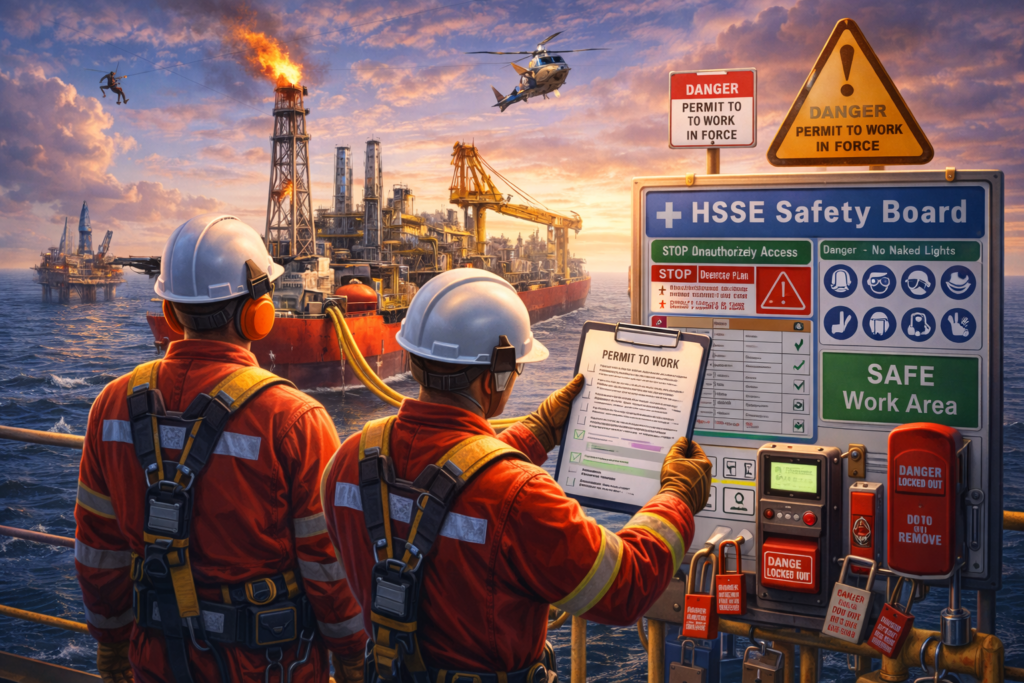

Marine and offloading operations are among the most safety-critical activities onboard a Floating Production, Storage, and Offloading (FPSO) vessel. These operations ensure that the FPSO maintains its position safely at sea and transfers stored crude oil to export tankers without incident.
This article provides a comprehensive overview of FPSO marine operations, including mooring systems, station keeping, offloading methods, operational controls, safety risks, and emergency preparedness.
Overview of FPSO Marine Operations
Marine operations on an FPSO are responsible for:
- Maintaining vessel position and heading
- Managing vessel interactions and navigation safety
- Coordinating crude oil offloading to shuttle tankers
- Ensuring marine regulatory compliance
- Managing marine-related emergencies
Unlike conventional ships, FPSOs are permanently or semi-permanently moored, requiring specialized marine systems and highly disciplined procedures.
FPSO Mooring Systems and Station Keeping
Purpose of Mooring Systems
The mooring system keeps the FPSO safely on station while allowing it to respond to:
- Wind
- Waves
- Currents
Common Mooring Configurations
- Internal turret mooring
- External turret mooring
- Spread mooring systems
Turret systems allow the FPSO to weathervane, aligning naturally with prevailing environmental forces.
Key Mooring Components
- Anchor chains and wire ropes
- Anchors or piles
- Turret bearings
- Mooring winches and tension monitoring systems
Continuous monitoring of mooring integrity is essential to prevent station loss or line failure.
Marine Navigation and Exclusion Zones
FPSOs operate within defined marine safety and exclusion zones to prevent collisions and unauthorized vessel approach.
Marine Control Measures
- Radar and AIS monitoring
- Marine watchkeeping and lookout duties
- Guard vessels and standby vessels
- Defined approach corridors for shuttle tankers
Effective marine traffic management reduces collision risk, especially during offloading operations.
Crude Oil Offloading Operations
Offloading is the process of transferring crude oil from the FPSO to a shuttle tanker for export.
Common Offloading Methods
- Tandem offloading (most common)
- Side-by-side offloading (less common, higher risk)
Tandem offloading involves the shuttle tanker positioning astern of the FPSO and connecting via a floating hose system.
Offloading Equipment and Systems
Key Offloading Components
- Floating or submerged offloading hoses
- Hose reels and handling systems
- Manifolds and loading arms
- Emergency Release Couplings (ERC)
- Offloading control and monitoring systems
All offloading equipment is classified as safety-critical and subject to strict inspection and testing regimes.
Shuttle Tanker Approach and Positioning
Before offloading begins, the shuttle tanker must:
- Receive marine clearance
- Conduct pre-offloading checks
- Establish communication with FPSO marine control
- Maintain heading and distance within defined limits
Dynamic positioning or conventional propulsion systems are used depending on the tanker design.
Offloading Procedures and Operational Controls
Typical Offloading Sequence
- Weather and environmental assessment
- Marine and SIMOPS approval
- Hose deployment and connection
- Pressure testing and leak checks
- Gradual ramp-up of transfer rate
- Continuous monitoring during transfer
- Controlled shutdown and hose disconnection
Clear procedures and checklists ensure consistency and risk reduction.
SIMOPS During Marine and Offloading Activities
Offloading often takes place alongside other FPSO activities, creating SIMOPS risks.
Common SIMOPS Conflicts
- Production and offloading
- Crane and deck operations
- Maintenance near offloading areas
- Marine traffic movements
SIMOPS plans define restricted activities, communication protocols, and emergency priorities.
Major Hazards in Marine and Offloading Operations
Marine and offloading activities expose the FPSO to several major accident hazards, including:
- Vessel collision
- Hose rupture or failure
- Oil spill and pollution
- Loss of station keeping
- Fire and explosion
- Personnel injury during hose handling
These hazards are controlled through engineering safeguards, procedures, and competent personnel.
Emergency Response During Offloading
Emergency Scenarios
- Sudden weather deterioration
- Shuttle tanker propulsion failure
- Hose damage or leak
- Fire or explosion
- Emergency disconnection
Emergency Controls
- Emergency Shutdown (ESD) systems
- Emergency Release Couplings (ERC)
- Abort and disconnect procedures
- Oil spill response equipment
Rapid decision-making and clear command authority are essential during marine emergencies.
Environmental Protection and Spill Prevention
Marine operations are tightly regulated to protect the marine environment.
Environmental Controls
- Continuous monitoring for leaks
- Secondary containment and drip trays
- Oil spill response plans
- Trained spill response teams
- Regular drills and exercises
Preventing pollution is a primary performance indicator for FPSO marine operations.
Roles and Responsibilities in Marine Operations
Key Marine Roles
- Offshore Installation Manager (OIM)
- Marine Superintendent
- Marine Control Room Operators
- Deck Crew and Mooring Teams
- Shuttle Tanker Masters
Clear role definition ensures effective coordination during normal and abnormal operations.
Competency and Training Requirements
Personnel involved in marine and offloading operations must be:
- Trained and certified
- Competent in emergency response
- Familiar with FPSO-specific procedures
- Regularly assessed and refreshed
Competency gaps can directly lead to major marine incidents.
Continuous Improvement and Assurance
Marine and offloading performance is continuously improved through:
- Incident investigations
- Near-miss reporting
- Marine audits and inspections
- Lessons learned from industry events
Strong assurance processes help prevent repeat incidents.
Conclusion
Marine and offloading operations are among the highest-risk activities onboard an FPSO. Safe execution depends on:
- Robust mooring and marine systems
- Clear procedures and communication
- Effective SIMOPS management
- Competent and well-trained personnel
When properly managed, FPSO marine operations enable safe, efficient, and environmentally responsible crude oil export throughout the field life.
Related FPSO Articles
- FPSO Production Operations and Process Systems
- SIMOPS Risk Management on FPSOs
- Emergency Response and Crisis Management Offshore
- Environmental Protection in Offshore Operations