Introduction
If you work in industries such as oil & gas, construction, manufacturing, aviation, logistics, mining, or maritime operations, you have likely encountered the term HSSE. It is more than just an acronym—it represents a core philosophy, management system, and operational discipline designed to protect people, assets, communities, and the environment.
But what exactly does HSSE stand for?
Why is it so critical to modern organizations?
And how does it differ from similar terms like HSE or EHS?
This article provides a comprehensive, professional explanation of HSSE, breaking down each component and showing how they work together to prevent incidents, injuries, losses, and environmental harm.
What Does HSSE Stand For?
HSSE stands for:
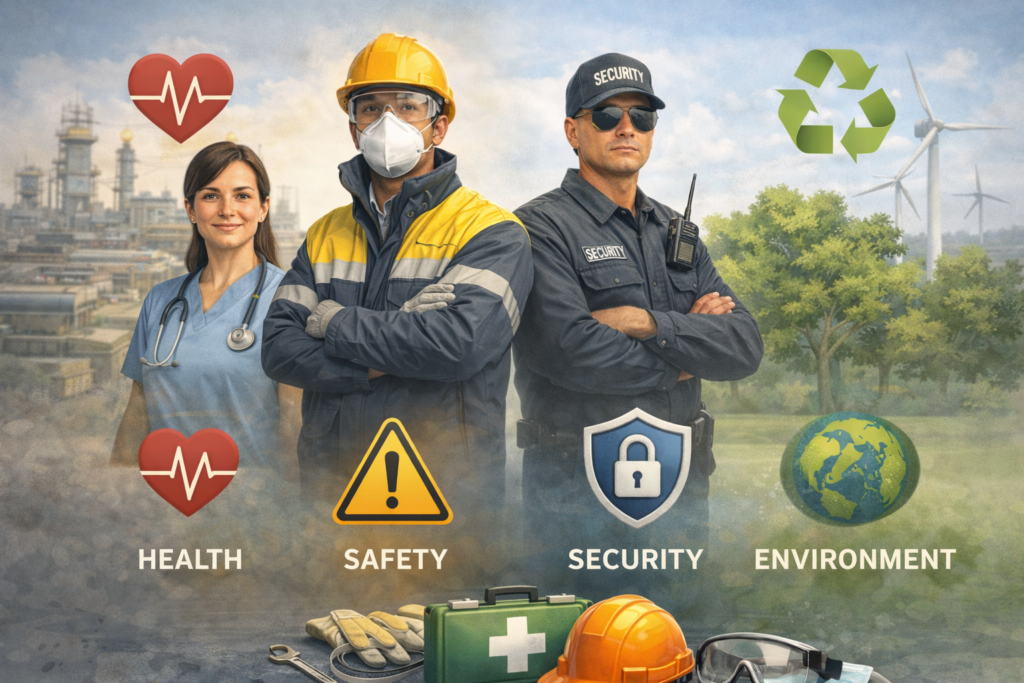
Health, Safety, Security, and Environment
Each element addresses a specific risk category within organizational operations. Together, they form an integrated risk-management and protection framework.
| Letter | Meaning | Primary Focus |
|---|---|---|
| H | Health | Worker physical & mental wellbeing |
| S | Safety | Prevention of accidents & injuries |
| S | Security | Protection from threats & unlawful acts |
| E | Environment | Prevention of environmental damage |
1. Health (H) in HSSE

What Health Means in HSSE
The Health component focuses on protecting workers from occupational illnesses and long-term health effects arising from their job activities.
Unlike safety—which often deals with immediate accidents—health risks are often silent and cumulative.
Key Health Areas Covered
- Occupational diseases (e.g., respiratory conditions, hearing loss)
- Exposure to hazardous substances (dust, chemicals, fumes, radiation)
- Ergonomics and musculoskeletal disorders
- Fatigue management and shift work risks
- Mental health and stress management
- Medical fitness for work
- Health surveillance and monitoring programs
Practical Examples
- Requiring respirators in dusty environments
- Noise monitoring and hearing protection programs
- Fitness-to-work medicals for offshore personnel
- Heat stress management in hot climates
Goal:
Ensure workers go home as healthy as—or healthier than—when they arrived at work.
2. Safety (S) in HSSE

What Safety Means in HSSE
Safety is the most visible part of HSSE. It focuses on preventing accidents, injuries, and fatalities during work activities.
Core Safety Elements
- Hazard identification and risk assessment
- Permit-to-Work (PTW) systems
- Job Safety Analysis (JSA/JHA)
- Safe systems of work
- PPE selection and enforcement
- Incident reporting and investigation
- Emergency response preparedness
Examples of Safety Controls
- Lockout/Tagout for electrical isolation
- Fall protection for working at height
- Machine guarding
- Confined space entry procedures
- Toolbox talks before critical tasks
Goal:
Achieve zero accidents and zero fatalities through proactive risk management.
3. Security (S) in HSSE

Why Security Is Part of HSSE
Security is what differentiates HSSE from HSE.
It addresses intentional threats—not accidental ones.
Security Risks Addressed
- Unauthorized access
- Theft and vandalism
- Sabotage and terrorism
- Kidnapping and piracy (especially offshore)
- Civil unrest and community conflict
- Cyber-physical threats to operations
Security Measures
- Access control and ID systems
- Security risk assessments
- Armed or unarmed security patrols
- Travel security management
- Emergency evacuation plans
- Coordination with local authorities
Goal:
Protect people, assets, and operations from deliberate harm.
4. Environment (E) in HSSE
What Environment Means in HSSE
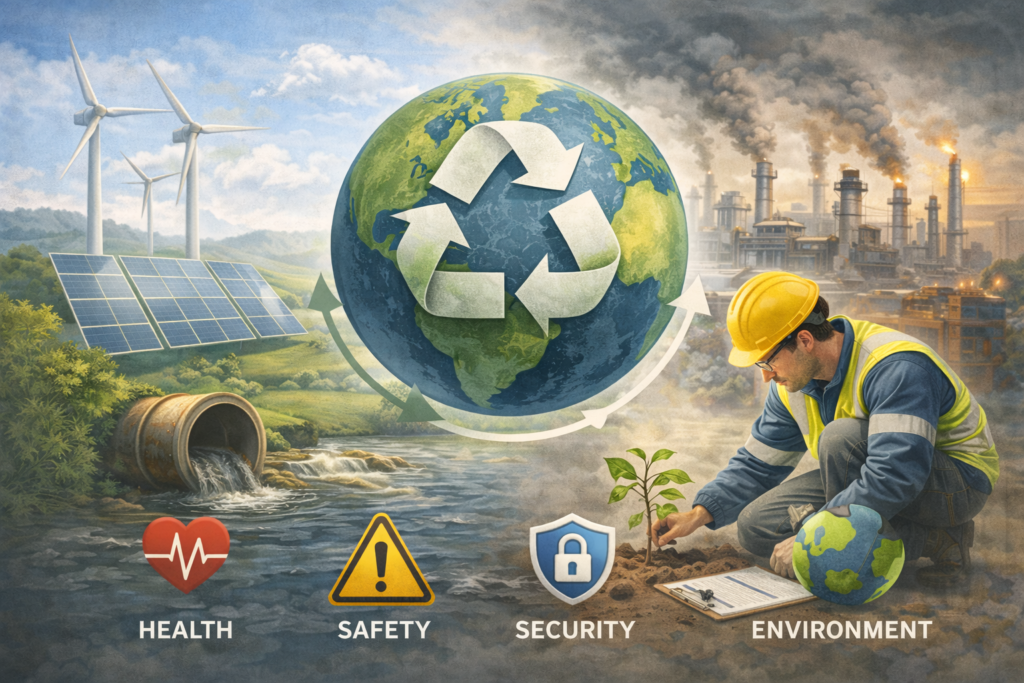
The Environment component ensures operations do not cause pollution, ecological damage, or regulatory violations.
Environmental Focus Areas
- Spill prevention and control
- Waste management (hazardous & non-hazardous)
- Air emissions and dust control
- Water protection and effluent treatment
- Biodiversity conservation
- Climate and energy management
- Environmental impact assessments (EIA)
Examples
- Oil spill response preparedness
- Proper disposal of chemical waste
- Dust suppression in construction sites
- Protection of marine life during offshore operations
Goal:
Operate responsibly while protecting the planet for future generations.
Why Organizations Use HSSE Instead of Just HSE
| HSE | HSSE |
|---|---|
| Focuses on health, safety & environment | Adds security risk management |
| Suitable for low-threat environments | Ideal for high-risk, complex operations |
| Limited threat coverage | Covers intentional & unintentional risks |
Industries such as oil & gas, aviation, shipping, mining, and large infrastructure projects prefer HSSE because security risks are real and significant.
HSSE as a Management System
HSSE is not just a concept—it is embedded into formal systems such as:
- HSSE policies & leadership commitments
- Risk-based planning
- Training and competence assurance
- Monitoring, audits, and inspections
- Incident investigation and learning
- Continuous improvement cycles
A strong HSSE system promotes a positive safety culture, where everyone is responsible for protecting people, assets, and the environment.
HSSE in Daily Work Activities
HSSE influences everyday decisions such as:
- Whether a job should proceed or be stopped
- How work is planned and supervised
- What PPE is required
- How contractors are selected and managed
- How emergencies are handled
- How near-misses are reported
HSSE is not paperwork—it is operational discipline.
Final Thoughts
HSSE stands for Health, Safety, Security, and Environment, and it represents a holistic, integrated approach to risk management.
When HSSE is done right:
- People stay safe and healthy
- Operations remain secure
- The environment is protected
- Businesses operate sustainably
HSSE is not a department—it is a mindset, a culture, and a leadership responsibility.